
A proper ojja, step by step, for a Tunisian Sunday
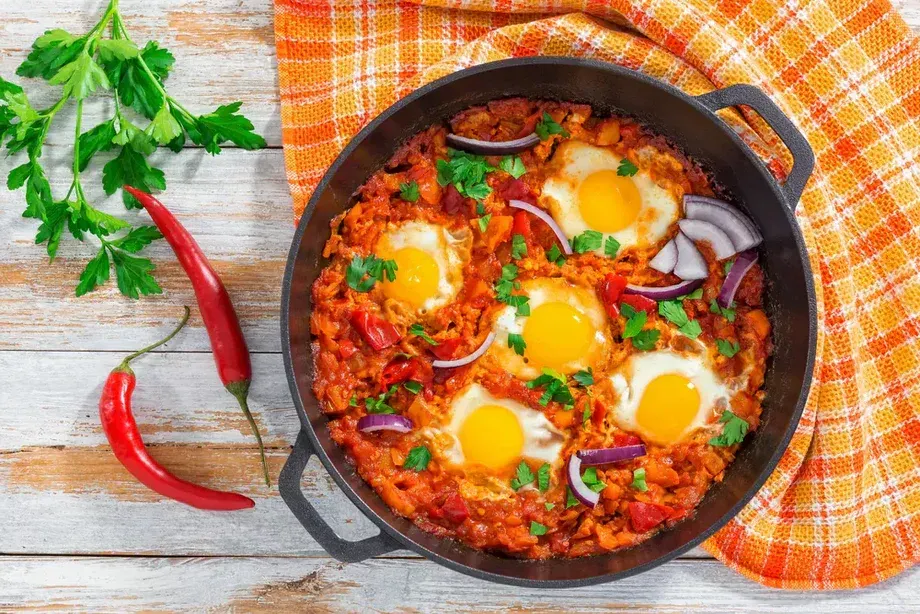
Every Tunisian has a dish that brings the house back to life. For some, it is couscous, the serious Sunday monument, with its steam, vegetables, meat, and family politics. For others, it is mloukhia, slow and dark and almost ceremonial. But ojja belongs to another mood altogether. It is faster, louder, more impatient. It is the dish of a Sunday that starts late, when the bread is still warm, the coffee has already been taken, and someone in the house says, almost casually: “Naamlou ojja?”
That is usually enough.
Ojja is not a refined dish, and it should not be made to behave like one. It is eggs cooked in a red sauce of tomato, garlic, harissa, pepper, and olive oil. It can be plain, with merguez, with prawns, with seafood, or with whatever the house has available. But the spirit of the dish is always the same. It must be hot, generous, fragrant, and eaten immediately, ideally from the pan, with bread doing most of the work.
There is a small confusion, especially outside Tunisia, between ojja and shakshuka. They are relatives, certainly. Both belong strictly to that North African family of dishes built around tomatoes, peppers, eggs, and heat. But ojja is more Tunisian in its temperament. It is less about vegetables and more about sauce. It is sharper with garlic, deeper with harissa, and often more direct. Shakshuka can be colourful and composed. Ojja is redder, thicker, and more urgent.
Its history is not the kind that belongs to palaces or written menus. Ojja is a popular dish, shaped by the Tunisian pantry: olive oil, tomato paste, harissa, eggs, bread, and whatever protein was affordable or available. It carries the logic of Tunisian home cooking: make something strong from simple ingredients, waste nothing, feed people quickly, and never forget the bread. In that sense, ojja is not just a recipe. It is a way of cooking.
For a proper Sunday version, merguez is hard to beat.
Ingredients for two people
You will need:
- 3 eggs
- 2 or 3 merguez sausages
- 2 tablespoons olive oil
- 3 garlic cloves, crushed or finely chopped
- 1 tablespoon tomato paste
- 2 medium tomatoes, grated or finely chopped
- 1 small green pepper, sliced thinly
- 1 to 2 teaspoons harissa
- ½ teaspoon ground caraway, karwiya
- ½ teaspoon tabil, if available
- ½ teaspoon paprika or felfel zina
- Salt and black pepper
- A small glass of water
- Fresh parsley, optional
- Fresh bread, preferably baguette, tabouna, or mlewi
Step one: brown the merguez
Place a wide pan over medium heat and add the olive oil. Put in the merguez and brown them gently on all sides. Do not rush this. The sausages should colour the oil and release their flavour into it. Once browned, remove them from the pan and set them aside. You can leave them whole or cut them into pieces.
Step two: build the base
Lower the heat and add the garlic to the same oil. Stir for less than a minute. The garlic should soften and perfume the pan, not burn.
Add the tomato paste and harissa. Cook them together in the oil for one or two minutes, stirring constantly. This is one of the most important parts of the recipe. Tomato paste cannot simply be thrown into the pan and forgotten. It needs to be cooked until it darkens slightly and loses its raw taste. The harissa also needs time in the oil, so that it becomes part of the sauce rather than something added on top.
Step three: make the sauce
Add the grated tomatoes, sliced pepper, caraway, tabil, paprika, salt, and black pepper. Stir everything together, then add a small splash of water.
Let the sauce simmer for about ten minutes. It should thicken slowly. The colour should become deep red, and the oil should begin to appear at the edges. That is when you know the sauce is becoming ojja and not just tomatoes in a pan.
If it becomes too dry, add a little water. If it is too loose, let it cook longer. Ojja should never be watery. The sauce must be thick enough to hold on to the bread.
Step four: return the merguez
Put the merguez back into the pan and let them cook in the sauce for another five to seven minutes. Taste the sauce. It should be rich, spicy, slightly smoky, and well seasoned. Adjust carefully. Merguez can already be salty, so do not add too much salt too early.
Step five: add the eggs
Crack the eggs directly into the sauce. There are two ways to finish the dish.
For a neater version, make small spaces in the sauce, crack the eggs into them, cover the pan, and let them set gently.
For a more Tunisian home version, crack the eggs into the sauce, wait a few seconds, then break them gently and fold them through. You do not want a dry scramble. You want soft ribbons of egg running through the red sauce.
The best ojja sits between these two methods. The eggs should be visible, but not separate from the sauce. They should soften it, thicken it, and make it richer.
Turn off the heat while the eggs are still slightly tender. The pan will finish the cooking.
Step six: serve immediately
Ojja does not wait. Bring the pan to the table if you can. Add parsley if you like, but do not dress it up too much. This is not a restaurant plate. It is a pan of Tunisian comfort.
Serve it with bread and eat while it is still hot. Tear the bread by hand. Take sauce, egg, pepper, and merguez together. If the bread comes back red and glossy, you have done it properly.
Happy Sunday ! Enjoy !