
Breaking: Israel and Iran trade strikes across the region as the April truce unravels
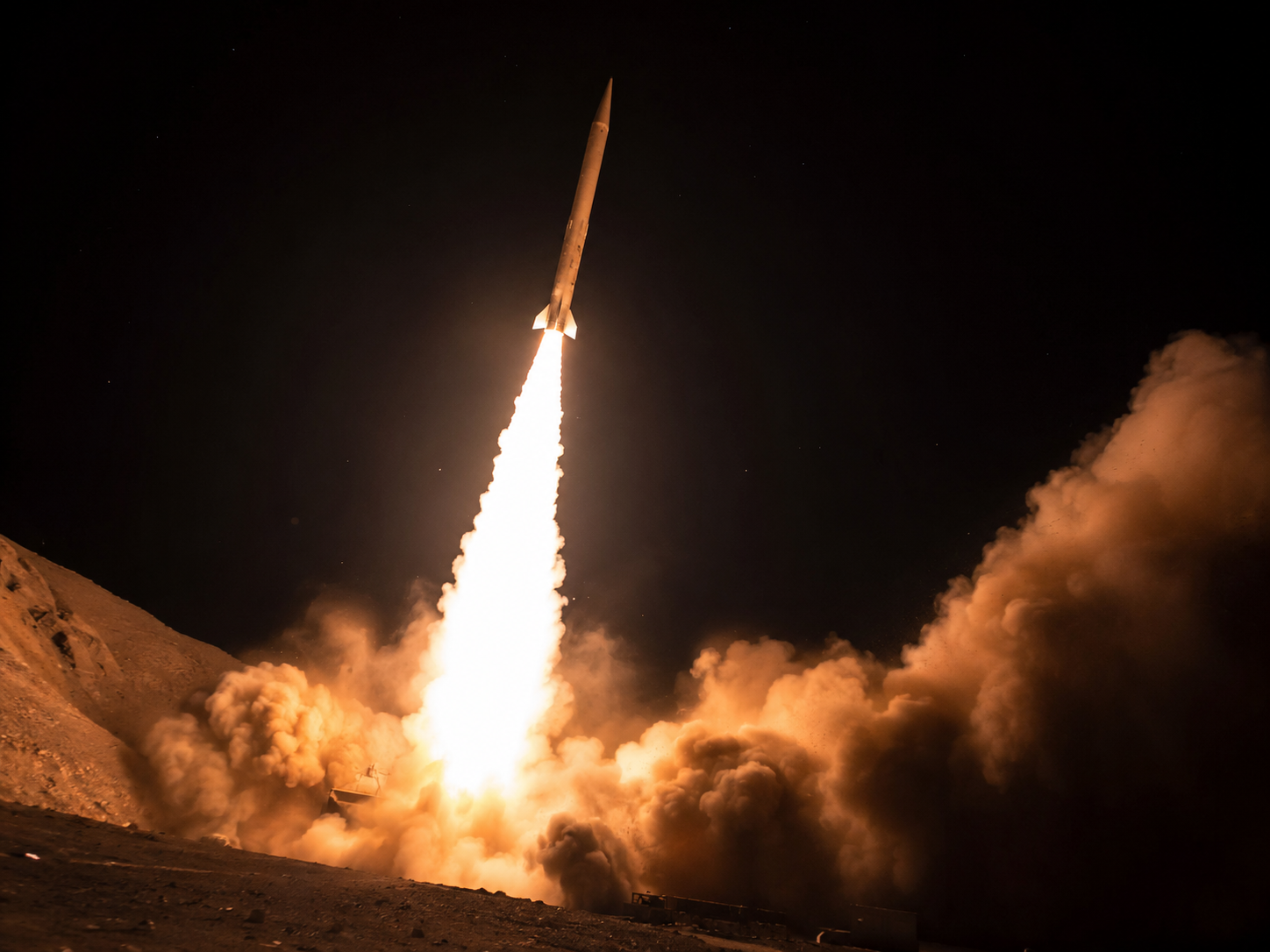
Israel struck military targets in western and central Iran early on Monday after Iran launched ballistic missiles towards Israel, in the most serious breach of the 8 April ceasefire so far.
The exchanges continued into Monday morning, with fresh waves of Iranian missiles reported and interceptions heard over the Jerusalem area, according to CNN.
Monday marks the 100th day of the war, which began with US and Israeli strikes on Iran on 28 February.
The latest chain of escalation began on the Lebanon front on Sunday. Hezbollah fired missiles towards northern Israel. Israel said the projectiles were intercepted.
Israel then carried out strikes on Beirut’s southern suburbs, known as Dahieh. Lebanese authorities said the strikes killed two people and wounded at least 11. Other live reports gave higher wounded figures.
Israel said the Beirut strikes targeted Hezbollah command centres.
Iran then launched ballistic missiles towards northern Israel. The Islamic Revolutionary Guard Corps said it targeted the Ramat David air base near Nazareth.
The Israeli military said the missiles were intercepted or fell in open areas. There were no immediate confirmed reports of casualties or damage from the first Iranian missile fire.
The IRGC said the attack was a response to the Beirut strikes. It described the operation as the beginning of a full week of continuous strikes, with missiles and drones to be launched around the clock unless Israel stops its attacks.
Iran’s armed forces said Israel had crossed all red lines by striking Beirut’s southern suburbs.
Iran’s supreme leader, Mojtaba Khamenei, said the bombing of Beirut had activated the first phase of Iran’s response and that those who break agreements would face the language of force.
Mojtaba Khamenei became Iran’s supreme leader in March after the killing of his father, Ali Khamenei, in US and Israeli strikes that opened the war.
Mohammad Baqer Qalibaf, Iran’s parliament speaker and top negotiator, said US bases and assets in the region had become legitimate targets after the Beirut strike.
Israel responded early on Monday with strikes on military targets in western and central Iran.
Iranian state TV reported explosions in Tehran, Isfahan, Karaj and Tabriz, according to AP. Iran also closed airspace around Tehran’s Imam Khomeini International Airport after the strikes.
Iran’s Revolutionary Guards said Israel used air launched ballistic missiles in the attack.
The conflict then widened further. CNN reported that Iran also struck what it called “terrorist groups” in Iraq.
CNN also reported that an Iranian missile came down in the occupied West Bank, where medics were sent to the area. Further details were not immediately available.
Reuters and The Guardian reported that a missile was also launched from Yemen towards Israel, the first such attack from Yemen since the April truce. The launch was attributed to the Houthis. No casualties were immediately reported.
Missile alerts also spread beyond Israel. CNN reported that sirens sounded in Saudi Arabia near a base hosting US forces.
Iran also raised the threat to regional waterways. Ali Akbar Velayati, a senior adviser to Khamenei, warned that Iran and allied forces could close the Bab al Mandab strait if Israel escalated further, according to Anadolu.
The Bab al Mandab links the Red Sea to the Gulf of Aden and is one of the world’s most important maritime routes. The warning added a second chokepoint to market concerns already focused on the Strait of Hormuz.
Markets reacted quickly. Brent crude rose to $96.24 a barrel, up 3.39 percent, while US crude climbed to $93.41, up 3.17 percent, as traders priced in the risk of a wider regional conflict and further disruption to energy supplies.
Asian stocks also fell sharply. Japan’s Nikkei lost 3.7 percent, South Korea’s KOSPI fell 5 percent and the MSCI Asia ex Japan index dropped 2.8 percent. India’s Nifty 50 and BSE Sensex both fell 0.95 percent as higher oil prices and the regional sell off weighed on investor sentiment.
The United States said it did not take part in the Israeli strikes, according to Axios.
US President Donald Trump is now pressing both sides. Reuters reported that Trump had urged Israeli Prime Minister Benjamin Netanyahu not to retaliate further, warning that escalation could complicate talks with Tehran.
Trump has also told Iran to return to the negotiating table and said the US was very close to a deal on stricter nuclear terms, according to CNN. He has said Netanyahu does not control the talks, saying: “I call the shots. He doesn’t call the shots.”
Inside Israel, the escalation has triggered emergency measures. Schools have been shut, hospitals have moved some operations underground, and Netanyahu has convened a narrow security cabinet, according to CNN and international live coverage.
The immediate question is whether the April ceasefire can survive direct and continuing exchanges between Iran and Israel, or whether the Beirut strike has opened a new phase in the regional war.
This is a developing story.