
China's grip on indium phosphide supply puts global AI data centre build-out at risk
Beijing's export licensing controls on a compound semiconductor at the heart of high-speed optical chips have caused prices to surge 250 percent and left the world's largest photonics suppliers with order backlogs stretching into 2028, threatening to slow the trillion-dollar AI infrastructure expans
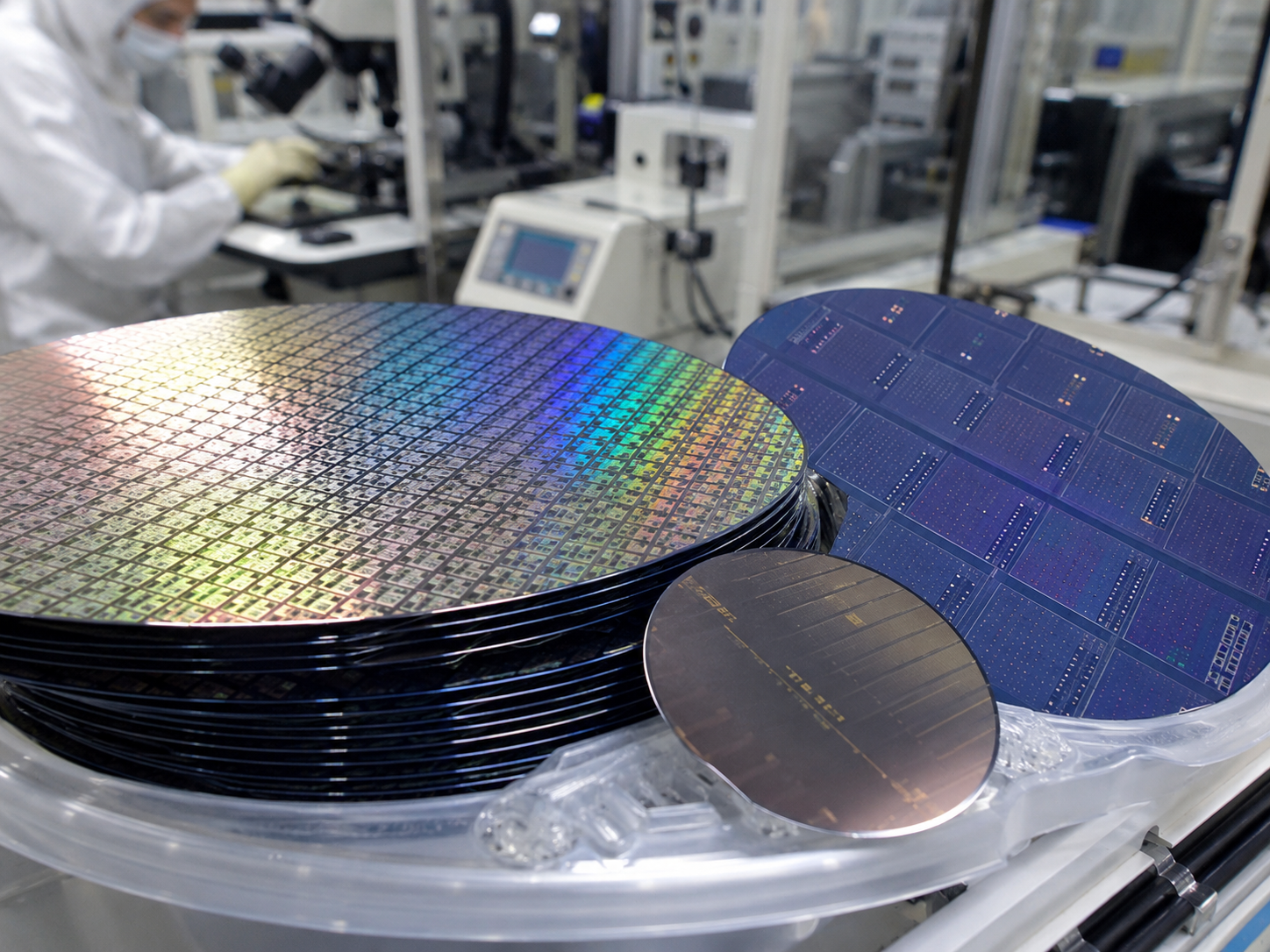
China's export controls on indium phosphide (InP), introduced on 4 February 2025, have emerged as a significant chokepoint in the global rollout of artificial intelligence data centres, with industry executives and US government officials racing to secure relief from Beijing as shortages deepen and costs climb.
The compound semiconductor is the foundational substrate material for the high-speed optical chips that carry data between processors inside AI data centres. Silicon cannot replicate its light-emitting properties: as a direct-bandgap material, InP is the only major integrated-photonics platform capable of both conducting and producing laser light at the wavelengths required by modern AI interconnects.
China accounts for about 70 percent of global indium production, according to the US Geological Survey, and has been 100 percent of the United States' source of refined indium metal since 1993. On 4 February 2025, China's Ministry of Commerce and General Administration of Customs issued Announcement No. 10 of 2025, placing indium phosphide substrates and related precursor chemicals under export licensing controls, alongside tungsten, tellurium, bismuth and molybdenum. The measure took immediate effect.
Diplomatic pressure
The supply squeeze has reached the highest levels of trade diplomacy. Coherent chief executive Jim Anderson travelled to China with a US business delegation accompanying President Donald Trump in mid-May, partly to raise the question of delayed export permits, three sources familiar with the matter told Reuters. The issue also featured in trade talks in Seoul between US and Chinese negotiators ahead of Trump's 14–15 May summit with President Xi Jinping, according to two US government officials and a person briefed on the discussions.
The May summit produced an acknowledgement from China that it would address US concerns about shortages, but no specific commitments to remove or substantially modify the controls were publicly confirmed.
Price surge and backlogs
Since the controls took effect, the average price for a 6-inch InP wafer has surged 250 percent to $5,000. The global InP wafer market, valued at just over $200 million, now operates as what analysts describe as a massive strategic chokepoint: a small physical input that governs the performance of trillion-dollar cloud computing and AI systems.
AXT, the world's second-largest InP substrate producer and a major supplier to Coherent, said in May that export permits represent its most significant current challenge. The company, which manufactures most of its InP substrates in China, said its Chinese subsidiary received its first export permits only in June 2024 and carries a significant backlog of orders, reported by analysts at over $60 million as of the first quarter of 2026. AXT said it is doubling capacity through the end of 2026 by repurposing existing facilities.
Lumentum, the other major InP player, is sold out through 2028 despite quadrupling output. Taiwanese optical manufacturers VPEC and LandMark Optoelectronics have also faced InP substrate disruptions tied to AXT's permit delays, according to SemiAnalysis analyst Konrad Wang, who said the restrictions ripple through the entire optical supply chain.
Nvidia's $4 billion response
The severity of the bottleneck is reflected in Nvidia's strategic response. On 2 March 2026, Nvidia announced multiyear strategic agreements with both Coherent and Lumentum, investing $2 billion in each company to expand US-based manufacturing capacity and accelerate research and development in advanced laser and optical networking components. Each agreement includes a multibillion-dollar purchase commitment and future capacity access rights.
Coherent, in which Nvidia holds a strategic stake, reported revenue of $1.8 billion in its fiscal third-quarter 2026 earnings call and said it expected to more than double internal InP capacity by the following quarter, then more than double again by the end of 2027.
No near-term substitute
Analysts say alternatives to Chinese-sourced InP are limited and slow to scale. US photonics firms are attempting to build their own InP substrate capacity and source from non-Chinese suppliers, including Japan's Sumitomo Electric Industries, but available capacity falls well short of demand. Industry checks published by Global Semi Research estimate that 2025 global InP shipments reached only 600,000 to 700,000 wafers against demand of 1.5 to 2 million wafers, a supply deficit exceeding 70 percent.
China's licensing regime adds a further layer of risk beyond price and volume. To obtain export approval, companies must submit detailed end-use information to Chinese authorities, giving Beijing visibility into customer identities and supply chain structures. Beijing Tongmei Xtal Technology received permits in August 2025 to resume shipping to certain additional customers, a sign that approvals are possible but remain selective and slow-moving.
With global spending on AI infrastructure expected to exceed $1 trillion in 2026, and with optical interconnect technology increasingly central to next-generation GPU clusters, the contest for AI supremacy has extended well beyond processors and electricity into the permits and photonic materials that allow those systems to function at scale.