
Ebola in the DRC: what the US CDC's Level 3 travel alert actually means
The US Centers for Disease Control and Prevention has placed parts of the Democratic Republic of the Congo under its highest routine travel alert as a Bundibugyo virus outbreak — for which no vaccine or approved treatment exists — surpasses 1,155 confirmed cases, prompting travel restrictions, borde
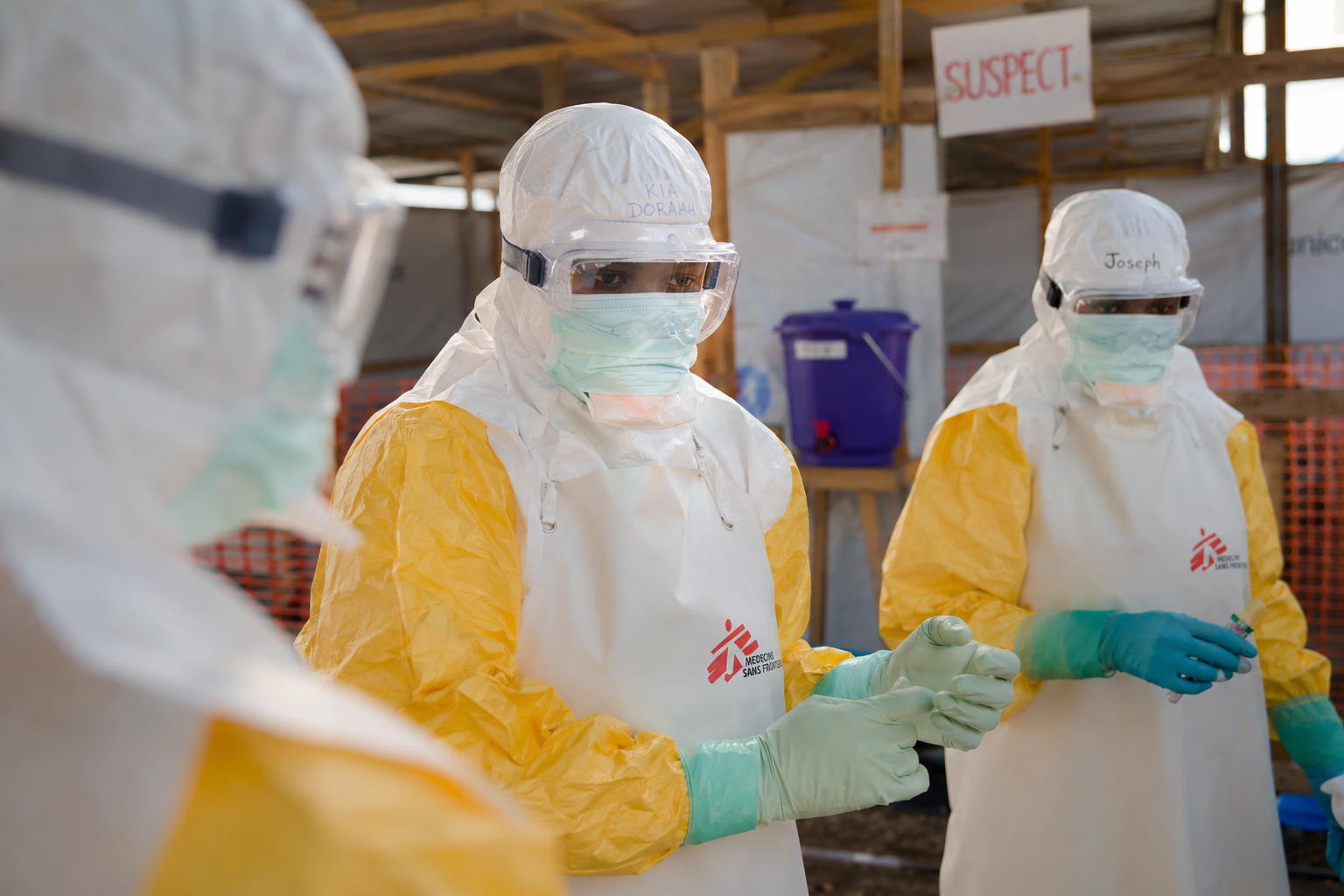
The US Centers for Disease Control and Prevention (CDC) is maintaining its highest routine travel warning — a Level 3 notice — for three provinces of the Democratic Republic of the Congo (DRC) as an outbreak of Bundibugyo virus disease, a form of Ebola for which no vaccine or approved treatment exists, surpassed 1,155 confirmed cases on Saturday 27 June, making it the third-largest Ebola outbreak on record.
As of 26 June, the DRC Ministry of Health had reported 1,155 confirmed cases, including 304 confirmed deaths, with 385 individuals hospitalised in isolation. In neighbouring Uganda, 20 confirmed cases and one death have been reported, all so far in Kampala.
What a Level 3 notice means
A CDC Level 3 Travel Health Notice signals a serious health risk at the destination and carries a strong recommendation to postpone or cancel non-essential travel. It is the ceiling of the standard three-level system the CDC applies to disease outbreaks worldwide.
On 15 May 2026, the CDC issued a Level 3 Travel Health Notice for people travelling to DRC and a Level 1 notice for Uganda. The affected provinces in DRC are Ituri, Nord-Kivu and Sud-Kivu, and the CDC recommends avoiding non-essential travel to those provinces.
A Level 3 notice does not automatically suspend flights or bar all travel, but it triggers a cascade of practical measures. From 18 May, the United States began restricting entry for travellers who had been in DRC, Uganda or neighbouring South Sudan in the previous 21 days. A renewed suspension order was issued on 21 June 2026, in effect for 30 days; under it, only US citizens and nationals, and certain US government and military personnel, may enter the United States if they have been in DRC, South Sudan or Uganda in the past 21 days.
The CDC has also issued a Health Alert Network advisory and engaged public health and clinical partners nationwide to ensure frontline providers have the information needed to identify and isolate possible cases.
The outbreak in numbers
On 15 May 2026, both DRC and Uganda declared outbreaks after laboratory tests confirmed infection by Bundibugyo virus in north-eastern DRC and Uganda's capital Kampala. This is the 17th recorded Ebola outbreak in DRC since the virus was first identified in 1976.
Ituri is the most affected province, with 1,054 confirmed cases across 22 health zones; North Kivu has recorded 98 confirmed cases from 11 health zones, and South Kivu three cases from one health zone.
MSF received alerts of deaths from a suspected viral haemorrhagic fever from 9 May; according to Congolese health authorities, the presumed index case was a nurse who died at the Evangelical Medical Center in Bunia in late April. CDC modelling suggests the virus may have been circulating since mid-to-late February 2026.
The Bundibugyo virus is particularly difficult to diagnose because manufacturers do not routinely produce enough specialised test kits, leaving frontline communities and health workers with extremely limited diagnostic capacity.
Why this outbreak is harder to contain
The Bundibugyo species of Ebola is one for which there is no vaccine or specific treatment, though work is ongoing to test promising candidates. The virus carries an estimated fatality rate of between 25 and 50 percent.
The outbreak is occurring in a challenging context: a humanitarian crisis in a remote and densely populated area, combined with insecurity and high population and trade movements. More than five million people have been displaced as a result of decades of conflict in Ituri, South Kivu and North Kivu.
One month after the outbreak was declared, Médecins Sans Frontières warned that major gaps in surveillance, diagnosis, contact tracing and community engagement were undermining efforts to bring it under control. The World Health Organization (WHO) believes efforts remain far below what is needed; Dr Rose Belizaire, WHO Africa's emergency response lead, described the response as "at about three or four" on a scale of zero to ten.
International response
On 17 May 2026, the WHO designated the outbreak a public health emergency of international concern (PHEIC). On 5 June, the Africa Centres for Disease Control and Prevention (Africa CDC) and WHO launched a six-month joint continental response plan to support the region's capacity to fight the outbreak.
The CDC recently accessed $107 million in emergency funding from the infectious disease rapid response reserve fund to expand and accelerate response activities and strengthen both international response and domestic readiness.
Within Europe, one confirmed case was reported in France on 24 June; a separate case — a US citizen — had been medically evacuated to Germany for treatment in May. Both were imported from DRC. The European Centre for Disease Prevention and Control (ECDC) assesses the likelihood of infection for people living in the EU and European Economic Area as very low.
What it means for North Africa and Tunisia
Tunisia has tightened health surveillance at airports, ports and land border crossings in response to the outbreak. Experts note that North African countries remain connected to the affected region through international air travel, creating potential pathways for imported cases.
Temporary recommendations from the first meeting of the WHO's International Health Regulations emergency committee did not include the suspension of flights from countries with documented Ebola detection or the denial of entry to travellers arriving from such countries.
The overall risk to travellers outside the affected region remains low; no Ebola cases associated with this outbreak have been reported in the United States, and the likelihood of the virus spreading globally is considered very low. Health authorities advise travellers who have recently returned from Ituri, North Kivu or South Kivu to monitor themselves for symptoms — fever, headache, muscle pain, vomiting and unexplained bleeding — for 21 days after leaving the area and to contact health services before presenting at a clinic if symptoms develop.
The situation in DRC and Uganda is described by the CDC as rapidly evolving; case counts are subject to change as laboratory confirmation of suspected cases continues.