
Libya’s fragile calm frays again as Zawiya fighting exposes Tripoli’s limits
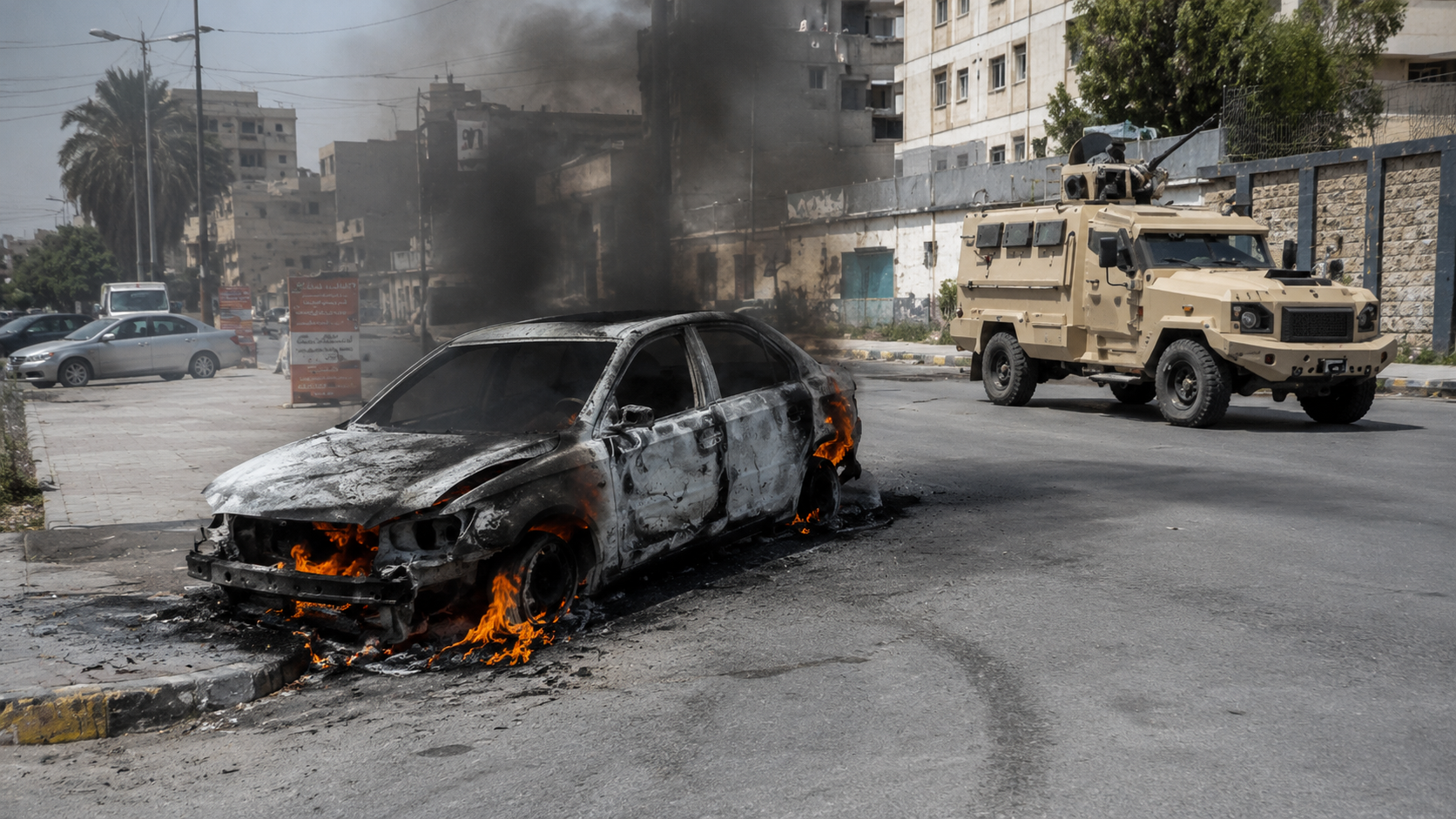
Libya’s latest round of violence around Zawiya has exposed the limits of the Tripoli government’s authority, after clashes near the country’s largest functioning refinery forced a shutdown, triggered emergency measures and revived questions over the control of armed groups west of the capital.
The Zawiya refinery, located about 40 kilometres west of Tripoli, halted operations in early May after heavy fighting broke out near the facility. Reuters reported that an emergency was declared and staff were evacuated, while the National Oil Corporation announced a precautionary halt at the oil complex. The refinery resumed full operations two days later, but the incident showed how quickly local fighting can threaten national infrastructure.
The clashes were presented by western Libyan authorities as part of a large security operation against criminal networks in Zawiya. Libyan and international reporting said the operation targeted groups accused of involvement in murder, kidnapping, fuel smuggling, drug trafficking, arms trafficking and irregular migration.
The fighting did not end the issue. The Libya Observer reported on May 30 that one person was killed and two were injured in renewed clashes in Zawiya, keeping the city in the spotlight weeks after the refinery shutdown. On June 2, Interior Minister Imad Al Trabelsi announced the closure of more than 500 fuel stations linked to smuggling violations, according to the same outlet.
The timing is politically sensitive. Prime Minister Abdulhamid Dbeibah’s Government of National Unity has repeatedly promised to reassert control over armed groups in western Libya. But each confrontation carries risks. Zawiya sits on the coastal road toward Tunisia, hosts major oil infrastructure, and has long been associated with networks involved in fuel smuggling and migration routes. A security campaign there can be presented as state building. It can also trigger armed resistance and disrupt the economy.
The latest unrest comes as Libya remains locked in a wider political impasse. The country is still divided between the Tripoli based Government of National Unity and rival authorities in the east aligned with the House of Representatives and Khalifa Haftar’s forces. A UN backed roadmap is supposed to move the country toward elections, but progress remains slow and contested.
On Wednesday, Libya’s 6+6 Joint Committee, the body formed by the House of Representatives and High Council of State to work on electoral laws, reaffirmed its support for a Libyan led dialogue as the best way to reach agreement on elections, according to The Libya Observer. The statement comes amid continuing disagreement over the legal and political framework needed to hold national votes.
The UN Support Mission in Libya has also kept pressure on the political track. Its roadmap, presented last year, is built around three core pillars: a viable electoral framework, a unified government and a structured dialogue to broaden participation. But the mission has faced resistance from institutions that fear losing influence in any transition.
The High Council of State has shown some of those tensions. In April, it voted to freeze the membership of any member who participates in agreements with political entities without official authorisation from the council, a move Anadolu Agency said came as the UN was pushing for smaller dialogue formats to break the deadlock.
Security unification remains another unresolved file. The Libya Observer reported this week that UN envoy Hanna Tetteh met Deputy Defence Minister Abdul Salam Al Zoubi to discuss efforts to unify Libya’s military institution. That issue has been at the centre of every major political process since the 2020 ceasefire, but rival chains of command remain in place.
The economic picture is more mixed. The National Oil Corporation reported a ten year revenue high of $4 billion in May, according to Libyan media. Energy companies are also moving ahead with new projects, including offshore gas work at the El Bouri field. Reuters reported in May that Libya is aiming to restart the Ras Lanuf refinery within six to twelve months, after resolving a long running dispute over the site.
Those developments point to the continuing importance of oil and gas as Libya’s stabilising asset. They also underline the country’s vulnerability. Production and refining remain exposed to local conflict, political bargaining, technical failures and disputes over control of revenues.
The Zawiya episode brought those contradictions together. The same government promising stronger security control also depends on fragile local arrangements. The same oil sector producing record revenues can be disrupted by fighting near a single city. The same political process calling for elections still lacks unified institutions capable of enforcing decisions across the country.
For Tripoli, the immediate test is whether the Zawiya operation becomes a sustained security campaign or another temporary show of force. For the UN, the challenge is to keep the political roadmap alive while armed groups and rival institutions continue to shape events on the ground.
Libya’s latest developments do not point to a single dramatic turning point. They show something more familiar: a country where political talks, oil revenues and security operations advance in parallel, but where the state still struggles to turn movement into control.