
Iran halts attacks after trading strikes with Israel as Trump presses for ceasefire
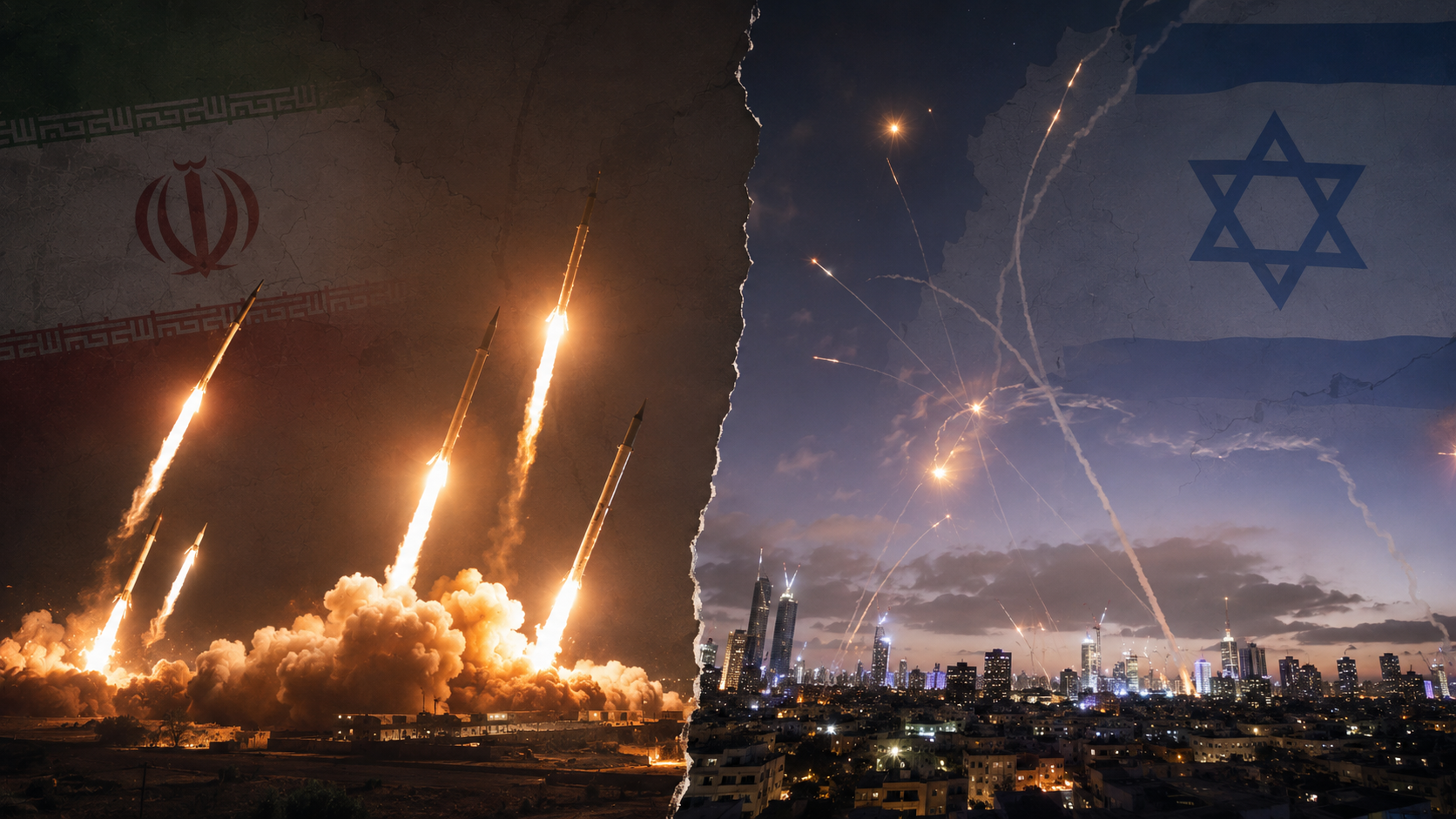
Iran announced a cessation of its military operations against Israel on Monday afternoon, hours after the two countries exchanged direct strikes in the most serious escalation since the April ceasefire. But the country's top military command warned it would respond "more severe and forceful than before" if Israel continues attacking southern Lebanon.
The developments over the past 24 hours have pushed the Middle East deeper into crisis. Here is what happened, in sequence.
Sunday evening: Iran fires missiles at Israel
Iran launched missiles toward northern Israel on Sunday evening. The Islamic Revolutionary Guard Corps (IRGC) called it "the beginning of a full week of continuous strikes" against Israel. The Israel Defense Forces (IDF) confirmed the attack, saying its aerial defence array was intercepting threats. Sirens sounded across multiple areas. Minutes later, the IDF reported an additional barrage.
The Iranian strikes followed Israel's aerial bombardment of Beirut's southern suburbs earlier on Sunday — the first attack on the Lebanese capital since a US-brokered ceasefire with Hezbollah took effect last week. Lebanon's health ministry said two people were killed and at least 20 wounded. Hezbollah confirmed it had fired at Israeli military positions earlier in the day.
According to multiple US and Israeli media reports, US President Donald Trump urged Israeli Prime Minister Benjamin Netanyahu not to retaliate against Iran's attack. Fox News reported that Trump also told Iran "that's enough."
Monday: Israel strikes Iran
Israel carried out retaliatory airstrikes on targets in western and central Iran on Monday. The IDF said it struck an Iranian petrochemical facility in the port city of Mahshahr, in the south-western province of Khuzestan, claiming the site produced raw materials for Iran's ballistic missile programme. Verified video footage obtained by BBC Verify showed smoke rising from the Karun petrochemical plant and from four of its spherical storage tanks. The governor of Khuzestan confirmed the plant had sustained damage but reported no casualties.
The IDF also said it had completed a large-scale strike on "strategic defence systems" inside Iran. The IRGC claimed it had targeted two Israeli air bases and a petrochemical plant in Haifa in response.
Iranian air defences downed a drone over Tehran, according to the Iranian news agency Mehr, following reports of multiple explosions in the capital.
Trump calls for ceasefire
Trump posted on Truth Social on Monday morning that Israel and Iran must stop "shooting" immediately. Hours later, he said the two countries were "looking to do an immediate CEASEFIRE" and that negotiations were proceeding but were "subject to ignorance or stupidity getting in its way." He added that the US blockade would "remain in place, and in full force and effect, until a 'Final Deal' is reached."
Israel's Channel 12 news reported, citing a senior Israeli official, that Israel was stopping attacks on Iran "at Trump's request" but would continue strikes in southern Lebanon if Hezbollah attacked. Reports in Israeli and US media indicated a phone call between Trump and Netanyahu had taken place on Monday, though no details of the discussion were released.
Iran announces halt, with conditions
In a statement on Monday afternoon, Iran's top military command — the Khatam al-Anbiya central headquarters — announced "the cessation of armed forces operations is hereby announced." But the statement warned that if Israeli attacks continued, "including in southern Lebanon," Iran would respond "more severe and forceful than before."
Iranian President Masoud Pezeshkian posted on X that the country's priority was "national security and the peace of our people" and that Iran would "not retreat in the face of any threat." He said Iran had "neither abandoned the field nor the negotiating table."
Iran's Foreign Ministry spokesman Esmail Baghaei told a press conference that the US "bears responsibility" for Israeli aggression and that the consequences of escalating tensions would "also be on the US." He said the exchange of messages between Iran and the US "had not stopped" and that Pakistan's Interior Minister had travelled to Tehran two days earlier to facilitate mediation. Pakistan has been a key channel between Tehran and Washington since the April ceasefire.
Hezbollah and the Lebanon front
Hezbollah said it launched a rocket barrage at a group of Israeli army vehicles and soldiers in southern Lebanon on Monday morning, in response to what it called Israel's "violation of the ceasefire and its attacks on villages in southern Lebanon." The IDF confirmed that three missiles were launched from Lebanon, saying "some of the launches were intercepted" and another "fell near the forces." No casualties were reported.
Israel is carrying out ground operations in southern Lebanon in what it says is an attempt to stop Hezbollah firing rockets into northern Israel.
What comes next
For the moment, the military exchanges appear to have paused. Iran has declared a halt pending Israeli behaviour in Lebanon. Israel, reportedly at Trump's request, has stopped its airstrikes on Iran but has not committed to restraint on the Lebanon front. The US is pushing for a ceasefire while maintaining its blockade on Iran. The underlying architecture of the April ceasefire has been severely damaged. This is a developing story.
Reporting contributed by BBC News and Al Jazeera.