
Lebanon's Washington framework deal draws criticism far beyond Hezbollah
The 14-point US-brokered agreement signed on Friday by Lebanon and Israel has fractured Lebanese politics, with parliament's speaker warning of civil strife, analysts calling the terms asymmetric, and Israeli ministers signalling their forces will stay in the south regardless of the deal's terms.
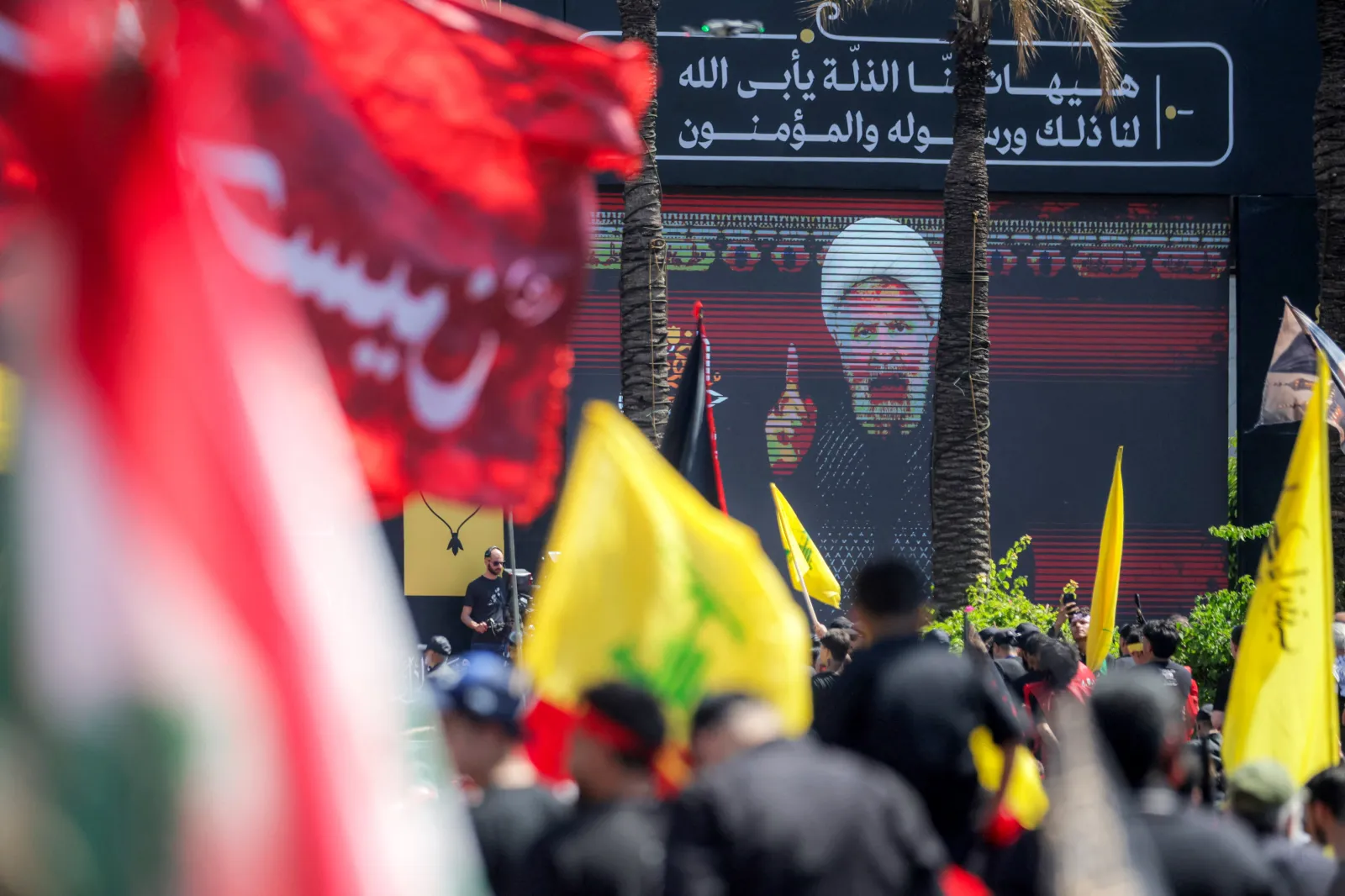
Lebanon, Israel and the United States signed a 14-point framework agreement at the US State Department in Washington on Friday 26 June, but the deal has since drawn sustained criticism from well beyond Hezbollah — exposing deep fault lines in Lebanese politics and raising pointed questions about whether the accord can be implemented at all.
The document was signed by Lebanese Ambassador Nada Hamadeh Moawad, Israeli Ambassador Yechiel Leiter and US State Department Counsellor Daniel Holler, with Secretary of State Marco Rubio presiding. Rubio described it as "a first step" in a process that still had "a lot of work ahead."
What the agreement says
The framework sets out a sequenced process: the Lebanese Armed Forces (LAF) will restore "effective sovereign authority over all Lebanese territory, pending the verified disarmament of non-state armed groups" — a formulation understood by all parties as a reference to Hezbollah. Only once that disarmament has been officially verified will Israeli forces "progressively redeploy" out of the large area of southern Lebanon they have occupied since the renewed offensive of early March.
The text states that Israel has no claim to Lebanese territory and commits both sides to continuing negotiations aimed at formally ending the state of war between them — the first such direct commitment since May 1983. A pilot phase will see Lebanese soldiers take control of two small areas currently held by Israeli forces, one south of the Litani River and one north of it, before any wider redeployment.
The US announced the creation of a trilateral Military Coordination Group for Lebanon (MCG4L), to be led by Washington, to supervise implementation. Rubio also announced $100 million in immediate US humanitarian assistance to Lebanon and more than $30 million to strengthen the Lebanese army's capabilities.
Hezbollah and allies: rejection and civil-war warnings
Hezbollah Secretary-General Naim Qassem declared the agreement "null and void," calling it "humiliating, shameful, and a surrender of sovereignty." He rejected any link between an Israeli withdrawal and Hezbollah's disarmament, and said the Iran-US memorandum of understanding signed in mid-June should supersede the Washington deal.
Parliament Speaker Nabih Berri — leader of the Amal Movement and a key figure in what Lebanese politics calls the "Shiite duo" — said the agreement was "contradictory and impossible to implement" and warned it was "designed to sow discord between the Lebanese." Sources close to the Shiite duo told Asharq Al-Awsat that Berri had not been consulted beforehand and learned of the agreement's contents from media reports after it was signed. Asked if he had read the text, Berri said: "I read it ... and I saw civil strife in it."
Hezbollah lawmaker Hassan Fadlallah separately warned that the only way to enforce the agreement in Lebanon would be through what he described as a US-backed civil war. Two Hezbollah-affiliated ministers — Labour Minister Muhammad Haidar and Health Minister Rakan Nasser al-Din — said at a cabinet meeting that they supported only indirect negotiations with Israel, aligning with Berri's position.
Supporters of Hezbollah took to the streets of Beirut on Friday night, burning tyres and blocking a road to the airport. The Lebanese army issued a statement warning it would "not allow any breach of security or infringement on civil peace," and a public prosecutor issued a judicial order tasking security forces with preventing riots and identifying those responsible.
Critics beyond the Shia bloc
Criticism extended to figures with no Hezbollah affiliation. Karim Emile Bitar, a professor of international relations at Saint Joseph University of Beirut, said the framework "essentially mirrors the reality of the military and political balance on the ground, which is decisively tilted in Israel's favour." He argued that the United States, as both Israel's main military backer and a signatory to the deal, was "unlikely to act as a neutral mediator" and that Lebanon was left with "little leverage and few effective guarantees."
Bitar drew a parallel to the Oslo Accords, arguing that, as with those agreements, the stronger party had secured recognition while offering no binding timetable for reciprocal obligations.
Former US diplomat Nabeel Khoury told Al Jazeera the agreement was "advantageous" for Israel but "very dangerous" for Lebanon. Israeli former ambassador Alon Pinkas expressed scepticism that the deal would work at all, telling Al Jazeera that the real issue was Hezbollah, not the bilateral relationship between the two states.
Druze leader Walid Jumblatt also remained opposed to the deal, according to analysis published by The Media Line, which noted that Lebanon's sectarian and political map left the pro-agreement camp with limited political weight.
The central structural problem
The deal's core vulnerability, as analysts and critics across the political spectrum identified it, is sequencing. Israeli withdrawal is conditional on Hezbollah's verified disarmament, a task the Lebanese state has repeatedly failed to accomplish. The Lebanese government had earlier declared Hezbollah's military activities illegal and attempted, unsuccessfully, to expel the Iranian ambassador — both moves that went unenforced.
Israel's own statements reinforced that scepticism. Israeli Defence Minister Israel Katz said he and Prime Minister Benjamin Netanyahu had instructed forces to prepare for an "extended stay" in the so-called security zone. Finance Minister Bezalel Smotrich went further, saying Israel would remain in Lebanon "also beyond" Hezbollah's disarmament because it needed "defendable borders." The word "withdrawal" does not appear in the agreement's text, Al Jazeera's Lebanon correspondent noted.
In Israel, the response was also mixed. Opposition leader Yair Lapid criticised the framework's terms, and former deputy prime minister Avigdor Lieberman wrote on X that "as long as Hezbollah exists and grows stronger every day, the next confrontation is only a matter of time despite the agreement." Some Israeli border-community leaders welcomed the deal in principle while insisting any withdrawal must remain strictly conditional.
Government backs the agreement
Lebanese Prime Minister Nawaf Salam said the agreement "aims to achieve Israel's withdrawal from all Lebanese territories," while President Joseph Aoun called it "a first step" towards restoring the country's sovereignty. Lebanese Ambassador Hamadeh Moawad framed the deal as a step toward ending the occupation rather than a move toward normalisation.
The Maronite Christian Kataeb Party leader Samy Gemayel congratulated the president and prime minister on what he called "the achievement accomplished by the Lebanese state." The Change Movement's Elie Mahfoud said the agreement marked a return of the state to sole responsibility for security, though he stressed that Iranian influence should not simply be replaced by any other foreign patronage.
Polling conducted by Information International and published by Al-Jadeed before the agreement — based on 2,000 respondents across Lebanese regions and communities between 28 April and 5 May 2026 — found that a majority of Lebanese supported reaching a peace agreement with Israel, though views were sharply divided by sect. Support ran at 84 percent among Druze respondents, 77 percent among Maronites, 72 percent among Orthodox Christians and 52 percent among Sunnis, while 92 percent of Shia respondents opposed such a move. L'Orient Today noted that Al-Jadeed did not publish full methodological details alongside the survey.
Iran condemned the deal across state-aligned media, with outlets describing it variously as a "document of shame" and a "strategic error," focusing their critique on the sequencing that conditions Israeli withdrawal on Hezbollah's disarmament rather than the reverse. Tehran's formal position is that the terms of the Iran-US memorandum of understanding, signed on 17 June, should govern the Lebanon file.
Whether Lebanon's government can enforce a deal that its own parliament speaker opposes, its armed groups reject and its army has never successfully imposed on Hezbollah before will be the first and defining test of the Washington framework.