
Libya seeks return of 7,000 year old mummy from Italy
The Takarkori remains are linked to one of North Africa’s most important prehistoric sites, where recent DNA research has offered new evidence about ancient Saharan communities.
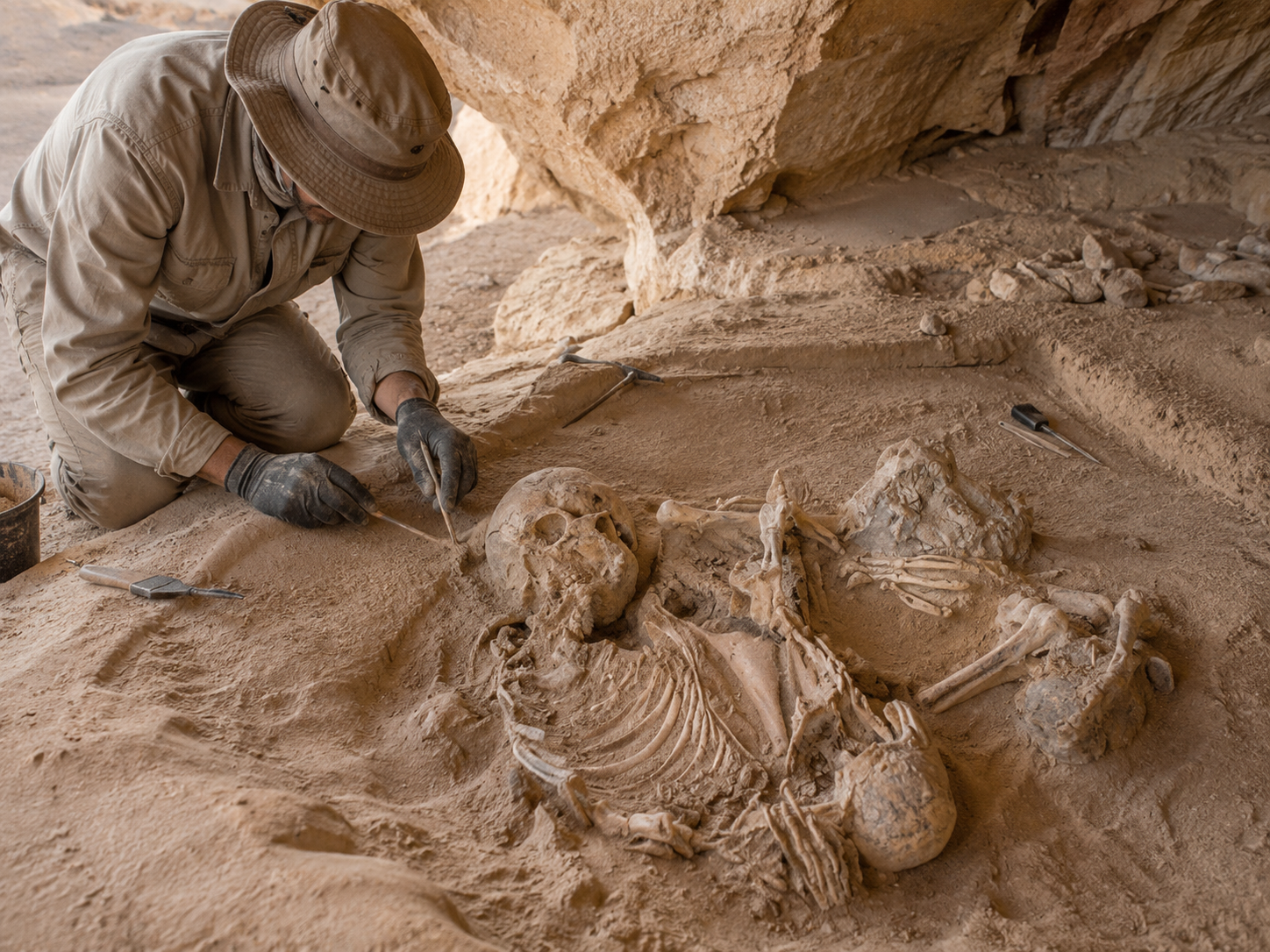
Libya is reviewing arrangements with Italy for the return of a 7,000 year old mummy discovered in the country’s south west, according to The Libya Observer.
The paper reported that Libya’s ambassador to Italy, Mohannad Younes, held talks with Italian archaeologist Professor Savino Di Lernia on the Libyan Italian project concerning the Takarkori Mummy.
The remains were discovered in 2003 in the Tadrart Acacus region, a desert area in south western Libya known for its prehistoric rock art and archaeological sites.
The Takarkori rock shelter has become one of the most important prehistoric sites in the central Sahara. Recent research published in Nature used genetic data from two approximately 7,000 year old naturally mummified individuals recovered from Takarkori to study ancient populations who lived in the Green Sahara.
That period refers to a much wetter phase in Saharan history, when parts of today’s desert supported lakes, vegetation, animals and pastoral communities. Archaeological finds from the region have helped researchers understand how people lived before the Sahara became the hyper arid landscape known today.
The Tadrart Acacus area is also listed by UNESCO for its rock art, with paintings and engravings that reflect major changes in the region’s climate, animals and ways of life over thousands of years.
The reported talks over the mummy come as countries across North Africa and the wider region seek the return of archaeological objects and human remains held abroad.
For Libya, the issue has particular weight. Years of conflict since 2011 have weakened state protection of cultural heritage, limited access to sites and complicated cooperation between Libyan institutions and foreign archaeological missions.
The return of the Takarkori remains would therefore carry both scientific and symbolic importance. It would bring back a rare prehistoric discovery linked to Libya’s deep Saharan history, while also raising questions about preservation, research access and the capacity of national institutions to protect fragile remains.
No date has been announced for the possible return. The discussions appear to be focused on the arrangements needed between Libyan officials and the Italian archaeological team involved in the project.