
Moroccan hospital deal faces Tunisian veto as politics enters health sector acquisition
Akdital’s planned $90 million acquisition of Taoufik Hospitals Group has run into uncertainty in Tunisia, where regulatory approval for the Moroccan group’s entry into the private health sector has become politically sensitive.
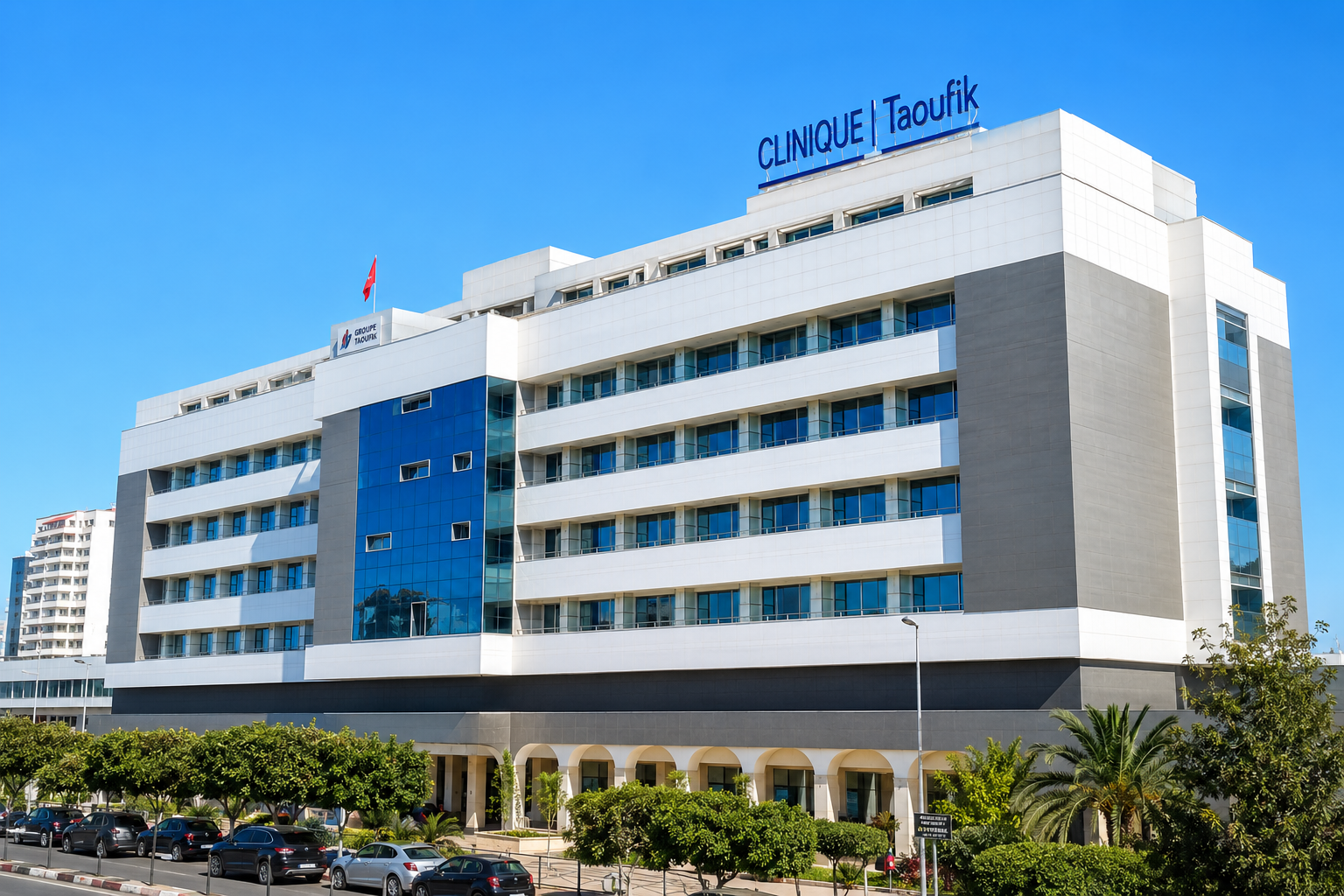
Tunisian authorities are weighing a veto on the sale of one of the country's leading private hospital groups to a Moroccan buyer, turning a cross border healthcare deal into a test of the frozen relationship between Tunis and Rabat.
The deal would hand Akdital, Morocco's largest private healthcare group, full ownership of Taoufik Hospitals Group for about $90m, or 900 million dirhams.
It was announced in December 2025 and still needs regulatory clearance in Tunisia, including from the country's Competition Council.
That clearance has not come. Africa Intelligence reported this week that the file was facing a possible veto, with sources tying the authorities' reservations to one factor: the Moroccan nationality of the buyer.
La Presse de Tunisie said the dossier remained under review, with no final decision announced. The news agency APA went further, describing the transaction as facing a government blockade.
Neither side has closed the door. Akdital has not withdrawn. Tunisia has not publicly rejected the deal. But the delay has moved attention from the commercial terms to the politics around them.
Taoufik Hospitals Group is one of the better known names in Tunisian private healthcare.
It runs four clinics in the Tunis area, Taoufik, Soukra, Ezzahra and Hannibal, with more than 600 beds, around 1,600 staff and a network of roughly 500 partner doctors. Its specialties include oncology, neurology, rehabilitation, trauma care and interventional cardiology.
For Akdital, the purchase was meant to be its first move outside Morocco.
The Casablanca listed group has grown fast at home, where it now operates 41 facilities across 24 cities, with more than 4,100 beds and close to 10,000 staff. It has presented the Tunisian deal as the opening of a wider regional platform in private healthcare.
Akdital has tried to frame the bid as a benefit to Tunisia, promising to invest in local medical infrastructure and to help keep Tunisian doctors at home rather than lose them abroad.
The difficulty is not only that the buyer is foreign. It is that the buyer is Moroccan.
Relations between Tunis and Rabat have been cold since August 2022.
At the TICAD summit in Tunis that month, President Kais Saied received Brahim Ghali, leader of the Polisario Front, with the honours of a visiting head of state. The Polisario seeks independence for Western Sahara, which Morocco considers part of its territory. The movement is backed by Algeria.
Rabat called the reception a grave and unprecedented act. It recalled its ambassador and pulled out of the summit. Tunis recalled its own envoy in turn and insisted it remained neutral on Western Sahara, in line with international law.
The rupture has not healed. It has hardened, and today neither country has an ambassador in the other's capital.
Morocco's envoy, Hassan Tariq, never returned to Tunis after 2022. In March 2025 King Mohammed VI named him the kingdom's Ombudsman, the Mediator of the Realm, formally vacating the post. Rabat has named no successor, a silence widely read as a deliberate signal that it will not normalise relations until Tunisia shifts on Western Sahara.
Tunisia mirrors it. Its ambassador to Rabat, Mohamed Ben Ayed, was recalled in 2022 and has since been moved to other roles at home, including a post at the foreign ministry, with no replacement named. Reporting in the region suggests Tunis will accredit no new Moroccan envoy while the core dispute remains unresolved.
The two economies give the politics little ballast. Trade between them runs at only about 2% of Tunisia's foreign trade.
Behind the dispute sits Algeria.
Under Saied, Tunisia has moved closer to Algiers, now a key partner on energy, border security and financial support. Algeria extended Tunisia a 300 million euro loan in 2021, as Western lenders grew wary of its finances. The tilt is visible enough that Rabat reads it as strategic rather than circumstantial.
For Morocco, the reception of Ghali was never read as a protocol slip. It was read as proof that Tunisia was aligning with Algeria on the most sensitive issue in Moroccan diplomacy.
That is the backdrop to the Akdital file. A Moroccan group is trying to buy into a Tunisian strategic sector at the moment when relations are at their lowest and Tunisia's tilt toward Algiers is most visible.
The basis of any decision will decide what it means.
A rejection grounded in competition rules, health sector regulation or ownership standards would keep the file inside a normal review. A veto driven by the investor's nationality would say something else entirely, and business circles on both sides of the Maghreb are watching for which it turns out to be.
For now the deal is neither approved nor dead. It sits with the Tunisian authorities, with no public explanation of their concerns and no timetable for a ruling.
If it goes through, it would give Akdital a foothold in Tunisia's private hospital market and stand as one of the most visible Moroccan investments in the country since the diplomatic break.
If it is blocked on political grounds, it would show that the freeze between Tunis and Rabat is no longer confined to recalled ambassadors and boycotted summits. It would have reached the approval desk of a private business deal.