
Rare compass jellyfish spotted off Tunisia’s coast
TunSea says the compass jellyfish is naturally present in the Mediterranean, but sightings remain rare in Tunisia and should be reported by beachgoers.
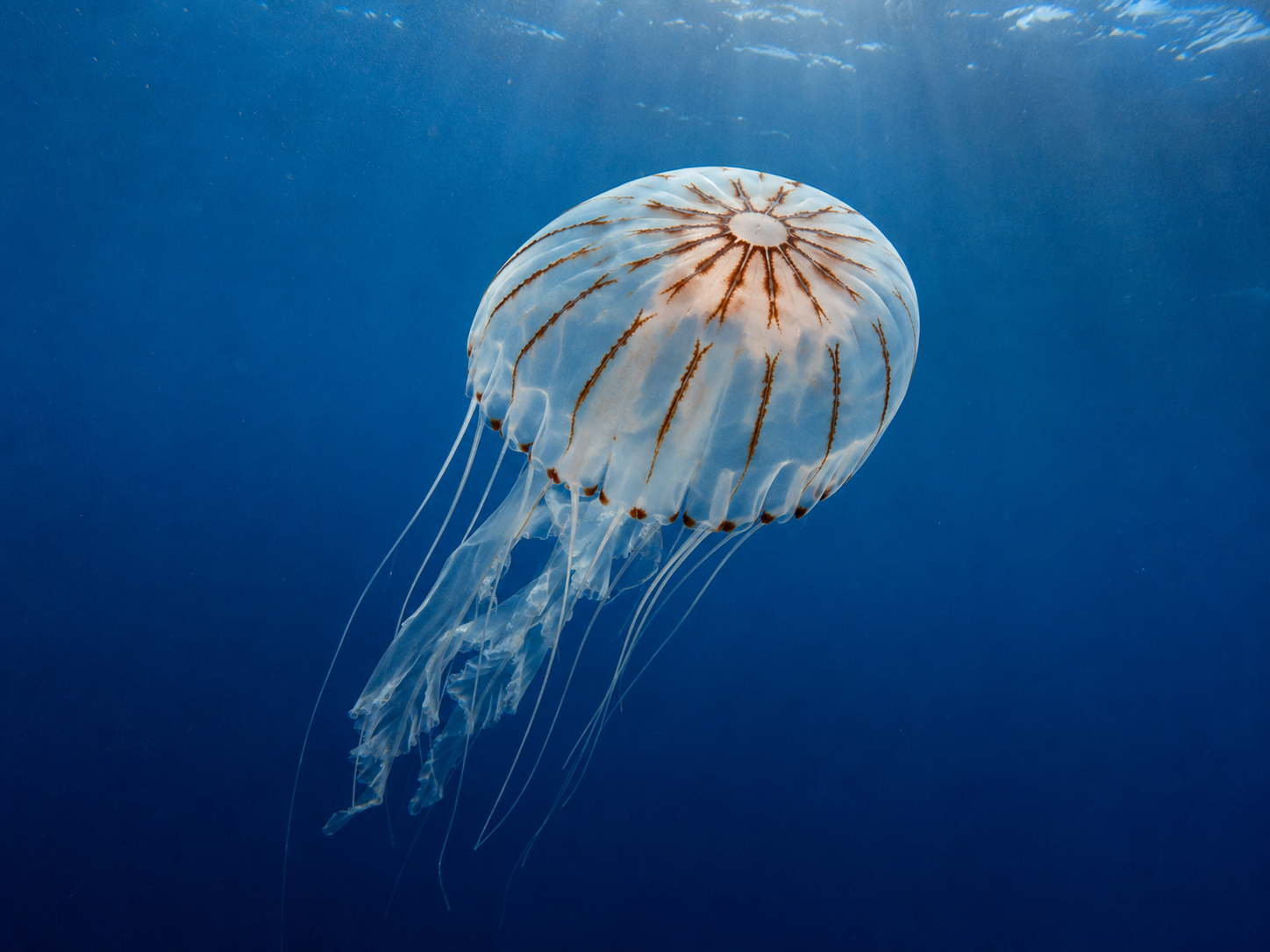
A rare jellyfish species has been spotted off Tunisia’s coast, prompting a citizen science group to ask beachgoers to report sightings.
TunSea, the Tunisian participatory science association, said the compass jellyfish, known scientifically as Chrysaora hysoscella, had been observed in Tunisian waters.
The species is naturally present in the Mediterranean, but sightings in Tunisia remain uncommon.
TunSea said its appearance was still possible and natural, especially when sea currents and climatic conditions change.
The compass jellyfish is recognisable by brown markings on its bell, often described as resembling a compass or star. It also has long tentacles.
Its bell is usually about 10cm to 30cm across, although Tunisian reporting on the sighting said larger specimens can reach up to 60cm. Its stinging tentacles can trail several metres behind it.
The species is found along other Mediterranean coasts, including Spain, France, Italy and Greece.
TunSea said the sting of the compass jellyfish is generally considered less painful than that of Pelagia noctiluca, the purple jellyfish also known as the mauve stinger.
Contact can still cause burning, pain or irritation, with reactions varying from one person to another.
The group has asked citizens who see the jellyfish to take a photograph, record the location and date, and estimate its size.
Those reports can help researchers monitor marine biodiversity and track rare or unusual species in Tunisian waters.
The sighting comes during a season in which TunSea has also reported unusual stinging marine organisms on parts of the northern coast.
In late May, the association reported sightings of the Portuguese man o’ war, Physalia physalis, near Tabarka. Tunisian coverage also reported later observations around Borj Cedria and near Soliman.
The Portuguese man o’ war is a siphonophore, not a true jellyfish, but its appearance has added to public attention around stinging organisms along the coast.
Scientists often link changes in jellyfish distribution to several factors, including sea temperature, currents, overfishing, pollution and wider changes in marine ecosystems.
TunSea’s appeal reflects a growing role for citizen science in Tunisia, where public observations can help researchers build a clearer picture of what is happening along the country’s coastline.
For swimmers, the advice is simple: avoid touching unfamiliar jellyfish, keep children away from stranded specimens, and report sightings with clear photos where possible.
If stung, people should rinse the affected area with seawater, avoid fresh water, and remove any visible tentacle fragments carefully. Medical advice should be sought if pain is severe, symptoms spread or the person affected is a child or vulnerable adult.
The appearance of the compass jellyfish is not being presented as an emergency.