
Testour, the Tunisian town where al-Andalus still breathes
In the Medjerda valley, Testour carries one of Tunisia’s most distinctive memories: the arrival of Andalusian Muslim refugees after their expulsion from Spain, and the survival of that inheritance in stone, music, names and everyday life.
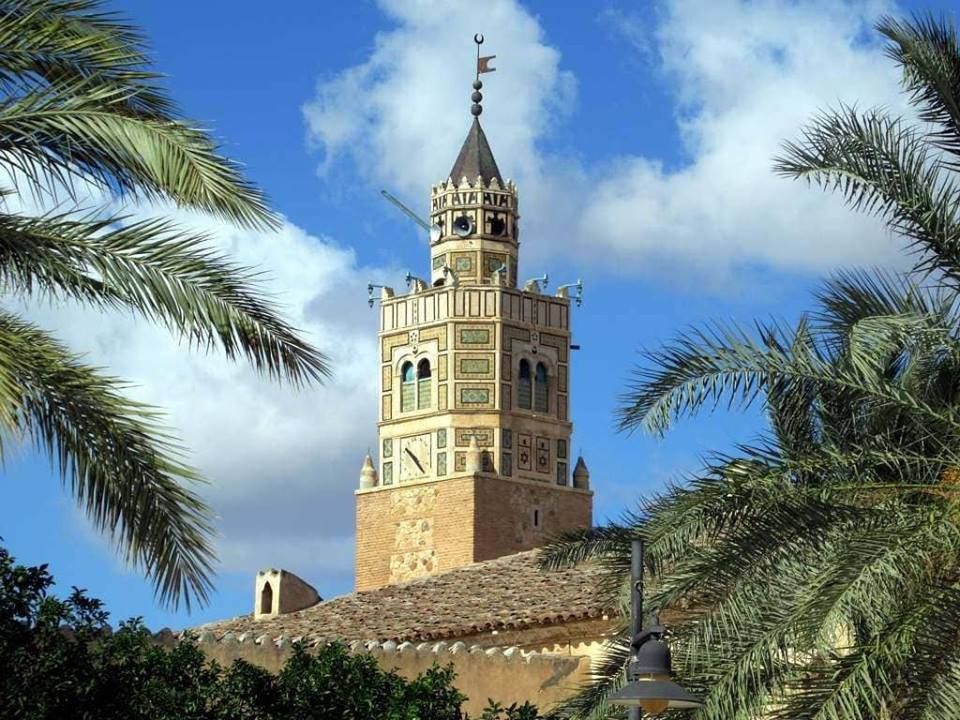
Testour does not announce itself loudly. The town sits in the Medjerda valley, between Tunis and Béja, with the calm of places that have seen more history than they display. Its streets are modest. Its houses are quiet. Its public square has the ordinary rhythm of a small Tunisian town. Yet few places in Tunisia carry such a dense and visible memory of exile.
This is one of the country’s clearest surviving traces of al Andalus, the civilisation that flourished in Muslim Spain before war, forced conversion and expulsion scattered its people across the Mediterranean. Testour rose on the remains of the Roman town of Tichilla. The town that shapes local memory today took form in the early seventeenth century, after the expulsion of the Moriscos, the Muslims of Spain who had been forced to convert to Christianity and were then expelled under Philip III between 1609 and 1614.
The Great Mosque is the town’s central monument. Built in the seventeenth century and associated with Mohamed Tagharino, an Andalusian émigré who arrived in Testour around 1609, it remains one of the most remarkable examples of Morisco architecture in Tunisia. Its power comes from mixture rather than size. The building combines local Ifriqiyan forms with Hispano Moresque techniques. Roman columns and ancient capitals were reused. Andalusian tiles, brickwork, pitched roofs and decorative details give the mosque a language distinct from the great religious monuments of Kairouan, Tunis or Sousse.
Its minaret gives Testour its most memorable image. The tower rises in two parts: a square base and an octagonal upper section, richly decorated and crowned by a roof that recalls Iberian forms. Its construction has often been compared to the Toledan method, with courses of brick and rough stone. From a distance, it can seem closer to an old Spanish bell tower than to a typical Tunisian minaret. That visual ambiguity is part of its beauty. It belongs to Tunisia, but it carries the memory of another shore.
Then there is the clock.
Set into the minaret, the clock has become Testour’s emblem. Its numbers are reversed. Its hands move counter clockwise. Visitors stop before it as if facing a puzzle. Some say it expresses nostalgia for Andalusia, as though time itself were turning back toward a lost homeland. Others see it as a symbolic westward glance, a gesture toward Spain. Others treat it as a local curiosity whose meaning has grown with each generation that has repeated the story.
For years, the clock stood silent. It was restored in 2014 through the efforts of Abdelhalim Koundi, a Testour engineer whose ancestors were among the Andalusian families who settled in the town. The image is hard to improve: a descendant restarting his ancestors’ reversed clock, and setting it running backwards again. Koundi has since campaigned for the monument to receive wider recognition, including through UNESCO.
The clock is often described as one of only a handful of reversed clocks in the world, and local tradition presents it as the only one placed on a mosque. Whether taken as architectural rarity, inherited symbol or civic myth, it has become inseparable from the town.
Testour’s Andalusian memory also survives in sound. The town is closely associated with malouf, the classical Tunisian musical tradition rooted in Arab Andalusian forms. Since the 1960s, the International Malouf Festival has helped make Testour one of the country’s recognised centres for this heritage. The music carries poetic forms, modes and rhythms that connect Tunisia to a wider Maghrebi and Andalusian world. In Testour, malouf sounds like continuity.
The inheritance also appears in family names, in craft traditions, in local stories and in the way the town understands itself. Landoulsi means simply “the Andalusian.” Serradji is commonly traced to the Banu Sarraj, the noble family of Granada remembered in Spanish legend as the Abencerrajes. Zbiss is carried by Slimane Mostafa Zbiss, the Testour born historian of Andalusian descent who spent much of his career documenting this heritage. Mourou, borne by Abdelfattah Mourou, the lawyer, politician and Ennahda co founder born in Halfaouine in Tunis, is another national example of a family name commonly associated with Morisco origin. Other names, including Sanchou and Cristou, preserve Hispanic echoes adapted through Arabic, memory and time.
These names do what monuments cannot always do. They let the past walk around in the present.
The Moriscos who came after 1609 arrived after a traumatic rupture. They had lived through pressure, suspicion, forced assimilation and expulsion. In Tunisia, they became farmers, builders, artisans, musicians, merchants, scholars and neighbours. They did more than preserve a lost world. They helped build a new one.
For Tunisia, Testour deserves a more central place in the country’s cultural imagination. It offers a rare combination of architecture, music, memory and landscape. It speaks to Spain, the Maghreb, Jewish and Muslim histories, exile and belonging. It could be better protected, better explained and more carefully placed on Tunisia’s cultural tourism map.
Walk through Testour today and the town asks for attention rather than admiration. The clock turns differently. The minaret looks across more than one shore. The music carries an old grammar of longing. In the middle of northern Tunisia, al Andalus survives as a memory that found a second life.