
How to order coffee in Tunisia
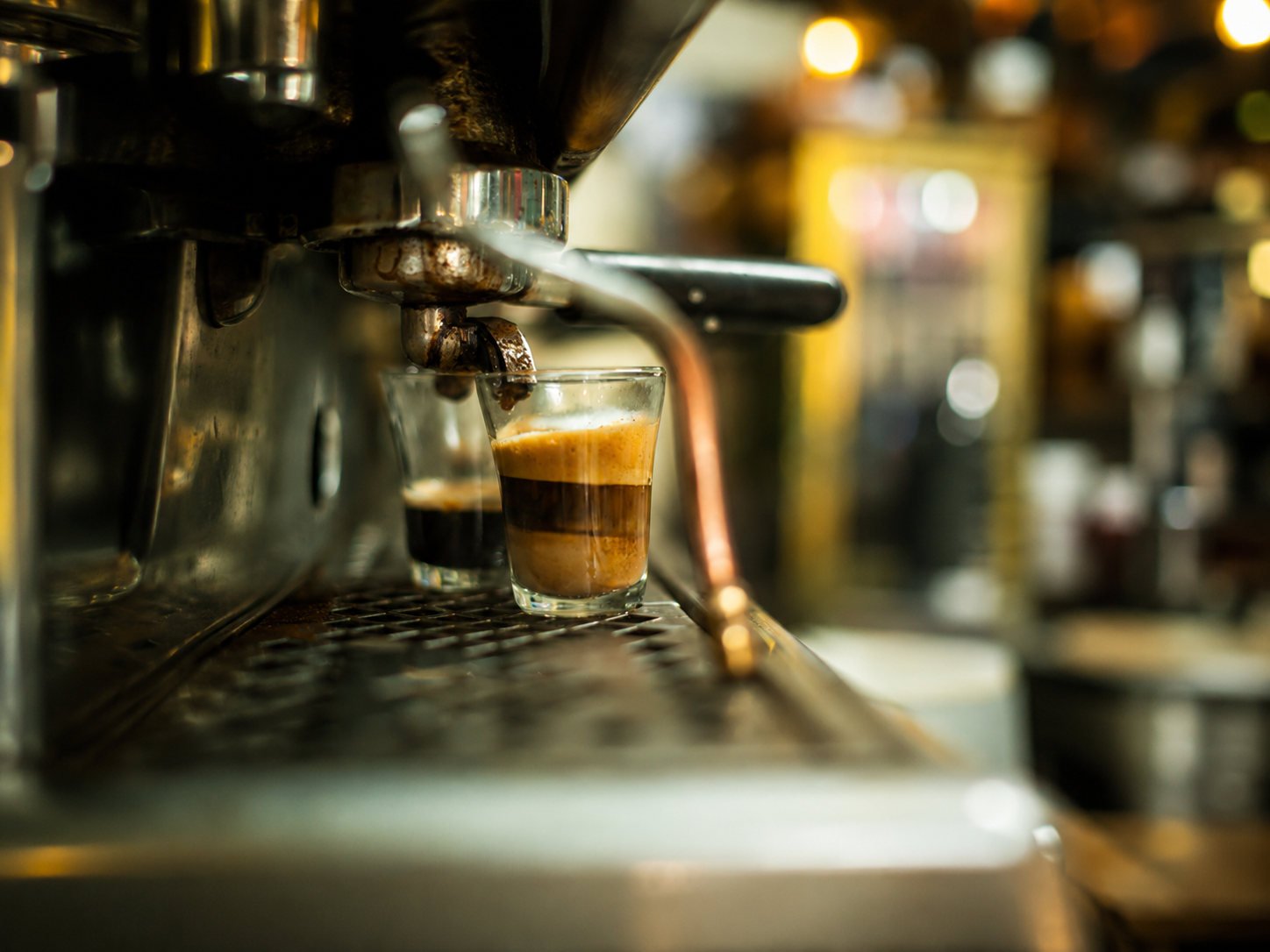
Coffee in Tunisia has its own vocabulary. Some words look French, some arrived with Italian café culture, and some have become fully Tunisian along the way. A capucin stands on its own, a strong little milk coffee closer to a macchiato than to a cappuccino. A direct brings you old style café coffee, so reach for an express when you want a true espresso. A spécial means the house has added something.
Menus also shift from place to place. A neighbourhood café, a salon de thé, a hotel breakfast room and a modern speciality café can use the same word three different ways. The reliable approach is to learn the families of drinks, then ask plainly for what you want.
The everyday black coffees
A direct is the old everyday order, usually understood as café filtre or café de comptoir rather than a true espresso. It is the coffee of older Tunisian cafés, simple, quick, strong enough and cheaper than the milk drinks. In some places it arrives with a little milk or stands in loosely as a basic coffee, so keep the practical meaning in mind, direct equals filtre or café ordinaire. Ask for un direct, or say café filtre to be clear. For a small black espresso, order an express instead.
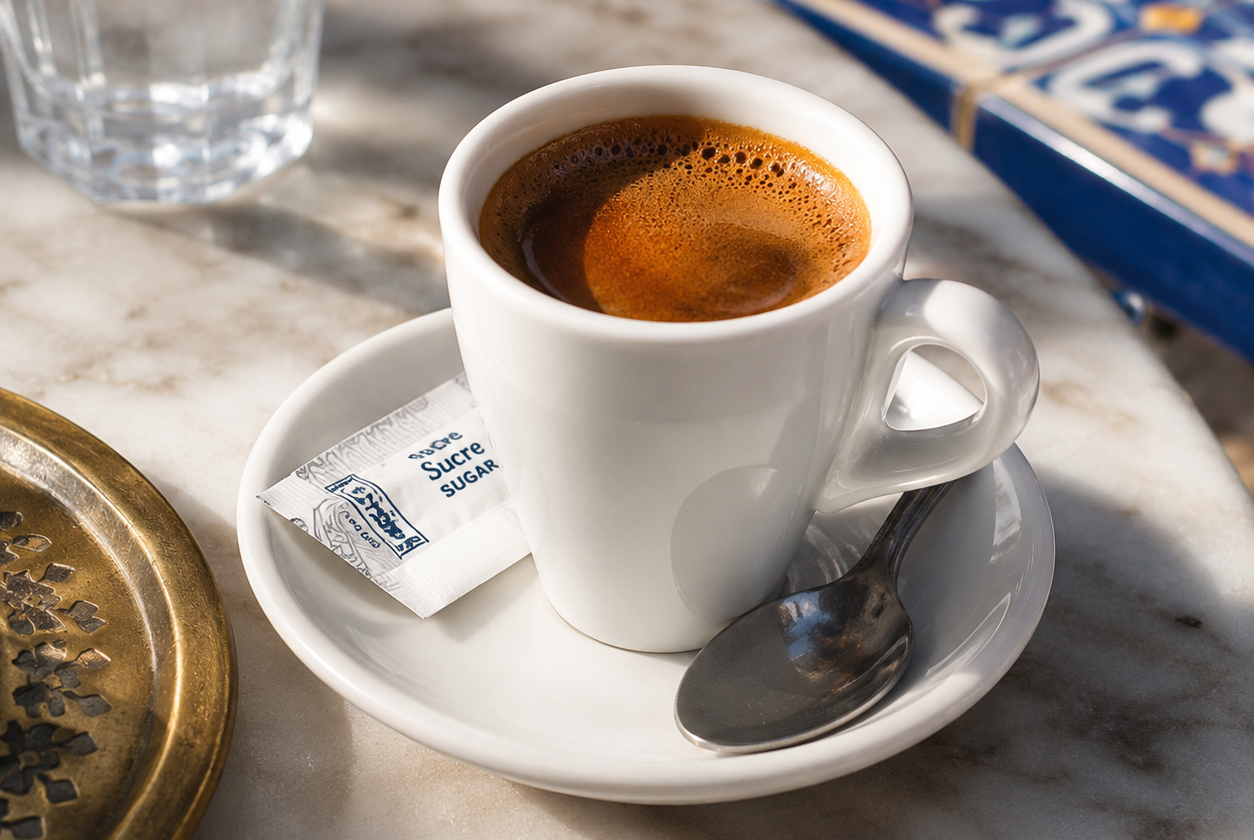
An express is the espresso style black coffee, short and concentrated in a small cup with crema on top, the closest Tunisian order to an espresso. Ask for un express, add serré if you want it stronger, and sans sucre or bla sokker if you take it without sugar.
An allongé, or express allongé, is the longer, gentler version, weaker than an express and close to double the quantity, made by pulling a longer shot or adding hot water. Ask for un allongé.
The milk coffees
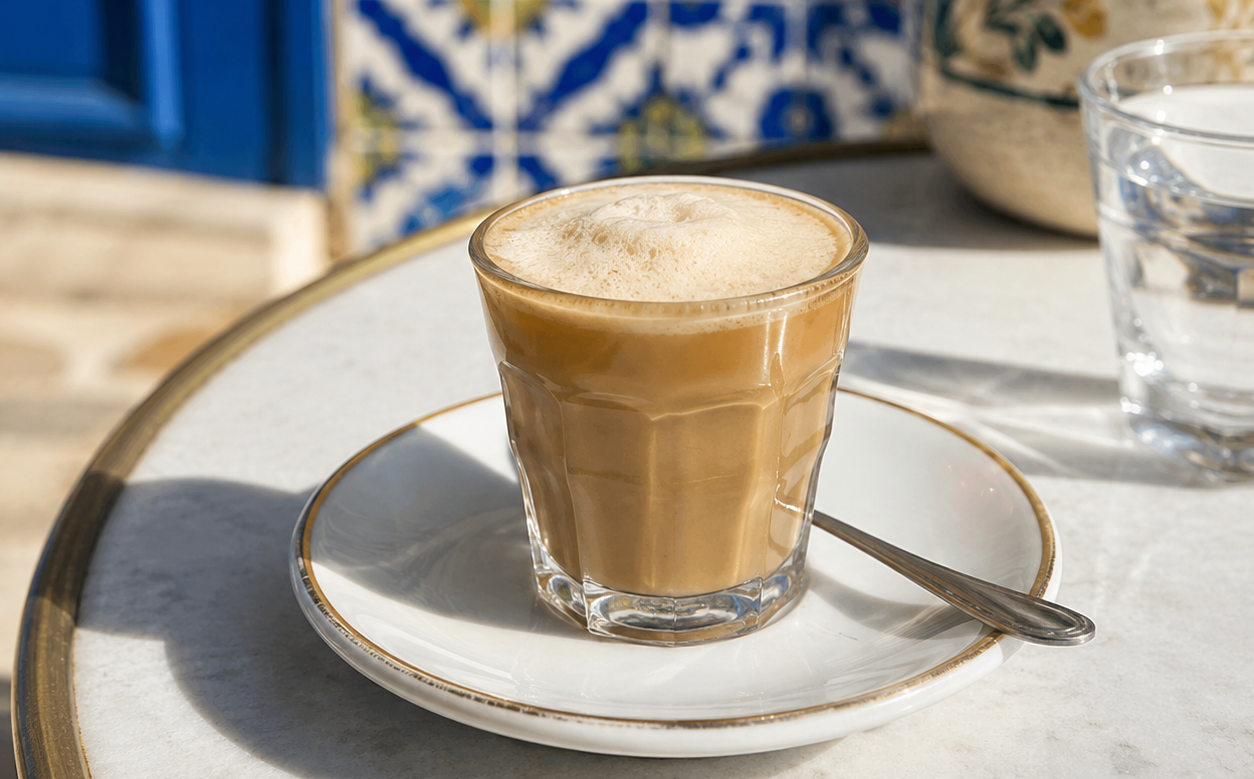
A capucin is one of the most Tunisian orders of all, an espresso base lifted with a small amount of milk or foam, stronger than a cappuccino and smaller than a café crème. Think of it as a café noisette in Tunisian dress. Ask for un capucin.
A capucin spécial is the richer, sweeter cousin. The word spécial signals an addition, most often lait concentré, the sweetened condensed milk that gives the cup its indulgent edge, though some cafés reach for cocoa, chocolate, cream or extra foam. Ask for un capucin spécial when you want a breakfast style treat.
A café crème is larger and softer than a capucin, with more milk and the feel of a sit down or breakfast cup. Ask for un café crème.
A café au lait is the loosest of the milk coffees, the home, hotel and breakfast order. It can mean filter coffee with milk, instant with milk, or simply a basic morning cup, depending on where you are. Ask for un café au lait.
The international additions
A cappuccino is the modern milk and foam coffee, increasingly common in salons de thé, hotel cafés and modern coffee shops, larger and milkier than a capucin and sometimes offered with caramel or noisette. Many current menus list capucin and cappuccino separately, which is the whole point, they are two different orders. Ask for un cappuccino.
A café américain is espresso lengthened with hot water, longer than an express and still black, more at home in modern cafés and salons de thé than in old neighbourhood spots. Ask for un café américain.
The traditional cup
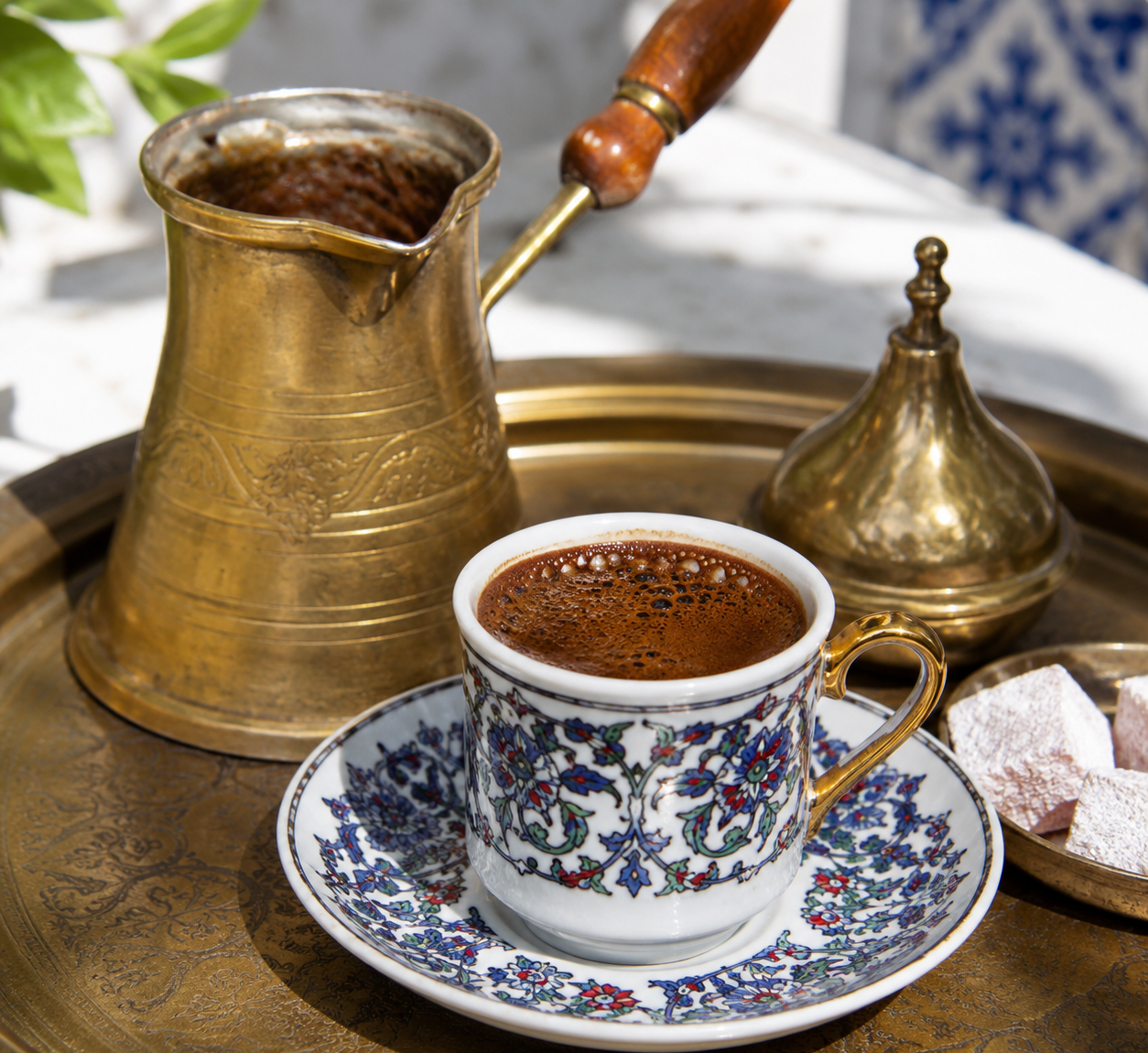
A café turc, known in Tunisia as qahwa arbi, is the unfiltered heritage cup, thicker and darker, served small with the grounds settling at the bottom in the Turkish and Arabic tradition. You will find it in traditional and tourist area cafés, in homes, and anywhere that makes a point of serving the old way. Ask for café turc or qahwa arbi, and stop sipping when the cup turns gritty.
Instant and cold
A Nescafé is instant coffee rather than an espresso style drink, served with hot water or milk, softer and less intense than an express, and often listed as its own category. Ask for un Nescafé.
A café glacé covers the cold end, iced coffee, frappé, iced latte and the sweeter dessert style cups that fill the summer menus. It is the least standardised of all, so use the name on the board. Ask for un café glacé, or the café's own label.
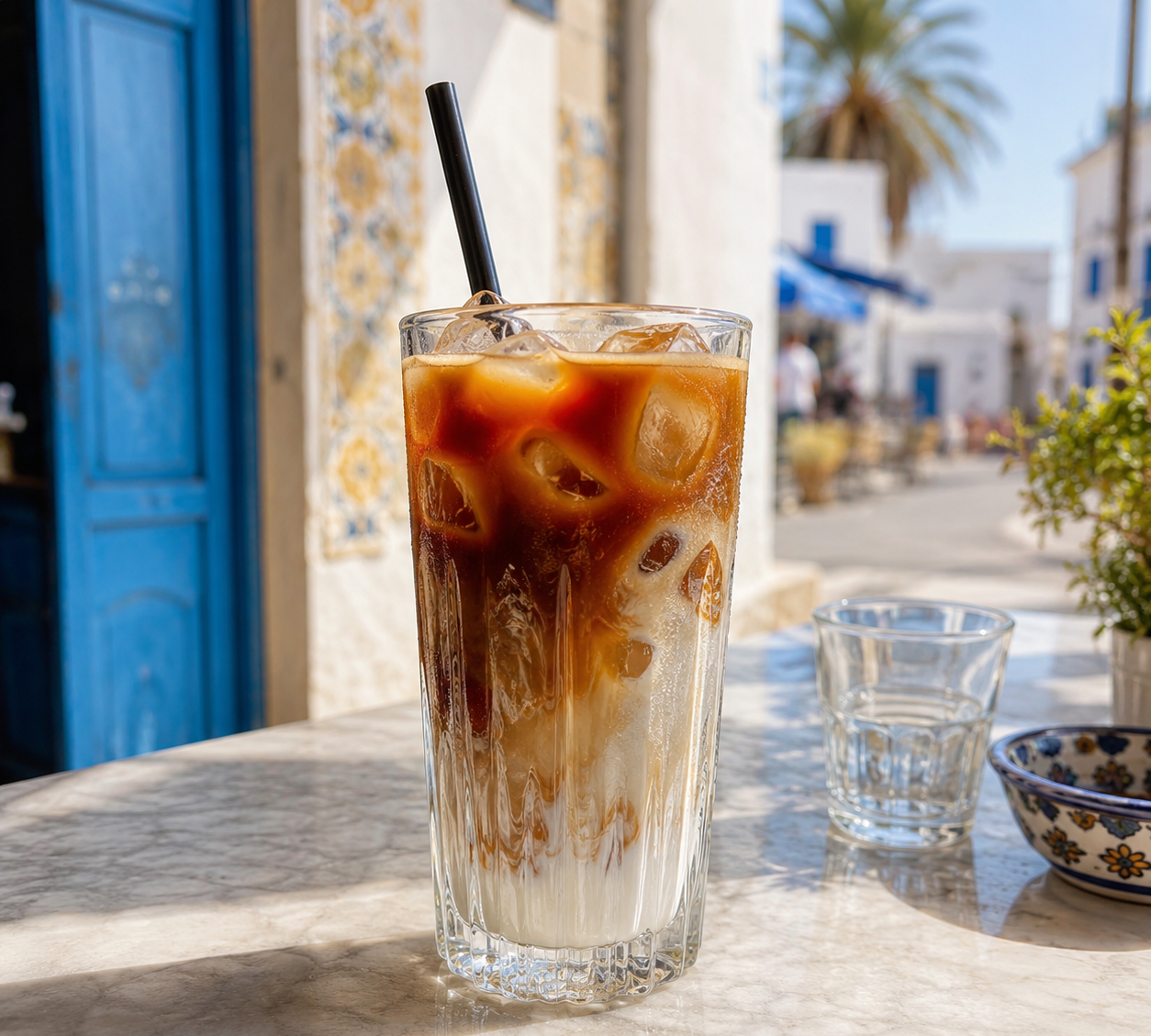
What spécial means
Spécial is the most flexible word on any Tunisian menu. Attached to a direct, an express or a capucin, it tells you the café has added something, commonly lait concentré, sometimes more milk, cocoa, chocolate, cream or a flavouring, sometimes simply a larger and richer pour. Because the meaning travels with the house, the one question worth memorising is spécial fih chnowa, meaning what is in the special. Digital menus across the country now list café direct spécial, café capucin spécial and café express spécial as drinks in their own right, which confirms that spécial has become its own upgraded category.
The quick guide
- Black espresso: order an express
- Old style filter coffee: order a direct, or café filtre
- Strong coffee with a little milk: order a capucin
- A sweeter, richer capucin: order a capucin spécial
- A milky breakfast coffee: order a café crème or café au lait
- A longer black coffee: order an allongé or café américain
- Traditional unfiltered coffee: order a café turc or qahwa arbi
- Cold coffee: order a café glacé, or use the café's own name