Benin's New President Reaches Out to the Sahel's Military Rulers
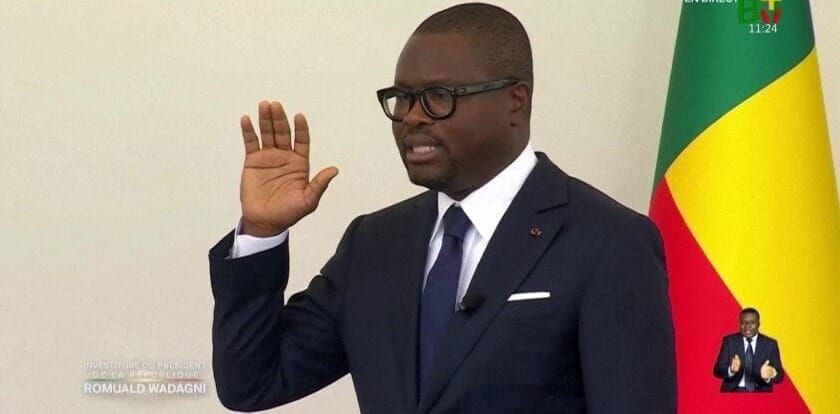
Why Romuald Wadagni's first foreign trip points north, and what he wants from neighbours his own bloc has spent two years shunning.
Ten days after taking office, Benin's new president, Romuald Wadagni, set off on 2 June on his first foreign tour, and he aimed it squarely at the Sahel. The itinerary takes in Burkina Faso, Niger, Togo, Côte d'Ivoire and Ghana, but the two stops that matter are Ouagadougou and Niamey, the capitals of the military governments that have spent the past two years as Benin's most difficult neighbours. The trip is a deliberate signal, and it raises an obvious question: why would a freshly elected coastal leader make peace with the region's juntas his first order of business?
The short answer sits on Benin's northern border. For several years the country's far north has been absorbing the violence of the Sahel, as fighters linked to al-Qaeda's regional branch, the JNIM coalition now strangling Mali, push south out of the interior toward the coastal states. What was once a distant Malian and Nigerien problem has become a Beninese one, with attacks on the border zones growing more frequent and more deadly. A coastal government cannot seal that frontier from its own side, because the fighters cross from, and shelter in, territory its neighbours control. Getting at the threat requires cooperating with those neighbours, which is precisely why Wadagni's security now depends on governments his own region has treated as outcasts.
The rift he has to bridge is deep. Mali, Burkina Faso and Niger are each run by officers who seized power in a string of coups, and in 2025 the three quit ECOWAS, the West African bloc Benin belongs to, to form their own Alliance of Sahel States. The two camps have been openly hostile. Benin's quarrel with Niger has been the sharpest. After Niger's 2023 coup, the new junta shut its border with Benin and accused it of harbouring French troops and conspiring against it, charges Benin rejected. The standoff froze relations and, just as damaging, choked a shared economic lifeline.
That lifeline is a pipeline. Niger's oil is landlocked, and its only route to the sea runs through Benin to a port near Cotonou. The line was built to enrich both, Niger earning export revenue and Benin collecting transit fees, but the border feud turned it into a weapon, with shipments cut off for long stretches. For Benin, reopening it means money. For Niger, it is the difference between selling its oil and sitting on it. Both sides have a hard, material reason to settle, which is part of why a thaw looks possible now.
There are early signs the freeze is breaking. Niger's prime minister attended Wadagni's inauguration on 24 May, a small but pointed gesture from a government that had refused to deal with Benin under his predecessor, Patrice Talon. Wadagni brings an unusual kind of credibility to the task. He is an economist who ran Benin's finances for a decade and cut the deficit by about a third, and he can approach the juntas as a pragmatist offering trade, transit and stability rather than as an outsider demanding they restore democracy. That is the register the Sahel's rulers respond to, after years of rejecting Western and regional pressure over how they took power. By touring their capitals himself, this early, he is betting that direct, transactional diplomacy can recover the security cooperation and the economic links that the political rupture destroyed.
What he is after is concrete: intelligence sharing and coordination against the jihadists pressing into his north, a reopened and dependable pipeline, and the open borders that a small trading economy needs to function. What he is risking is equally clear. He is an elected leader, however contested his landslide win, courting men who rule by force, and drawing too close to the juntas could strain Benin's standing inside ECOWAS, which has spent two years trying to isolate them. His task is to keep a foot in both worlds at once, the bloc he belongs to and the breakaway alliance he cannot do without.
That is why the trip is worth watching. Benin sits exactly on the fault line now running through West Africa, between the coastal states still inside ECOWAS and the Sahelian juntas that walked out. How a pragmatic new president manages that line, whether he can do business with the juntas without being pulled into their orbit or breaking with his own camp, will be studied by every coastal country facing the same southward creep of violence. Wadagni made his name making the numbers work. The problem in front of him now has no budget solution: a stretch of border he cannot secure without the help of the neighbours his region has spent two years keeping at arm's length.