Business Presses Tunisia to Loosen Its 1970s Currency Controls
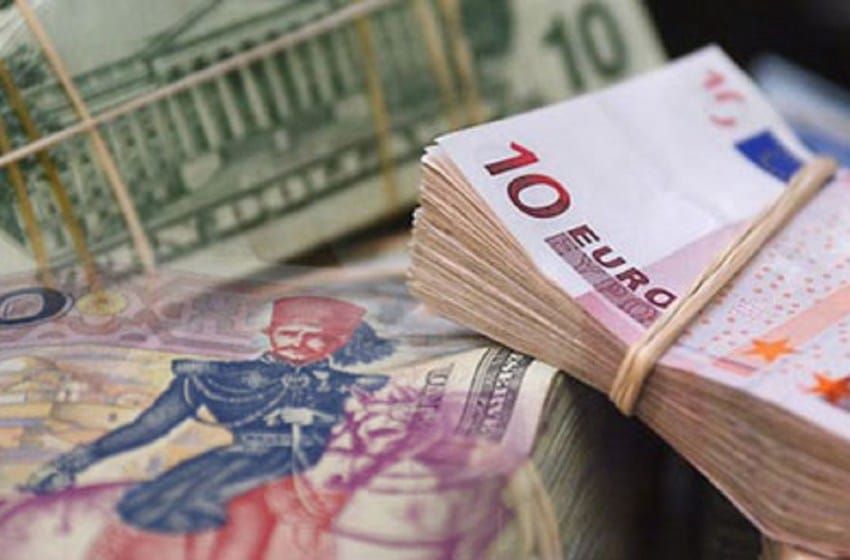
As parliament rewrites the foreign exchange code, the employers' group CONECT wants automatic approvals, a single digital window, and rules built for investors and freelancers.
Tunisia is rewriting the rulebook that governs how money crosses its borders, and its business lobby wants the new version to be far more open than the old one. As parliament examines a reform of the foreign exchange code, the employers' confederation CONECT has put forward 41 proposals, 38 of them amendments to the draft and three entirely new measures, aimed at turning a framework it considers outdated into a tool for attracting investment.
The code in question has been in force since 1976, and it shows its age. Tunisia maintains tight control over foreign currency. The dinar is not freely convertible, moving money in and out requires permissions, and the half century old system is widely blamed for deterring investors and pushing activity into the informal economy and the parallel currency market. Modernising it has been promised for years. The draft now before parliament is the most serious attempt in a long time, and CONECT is trying to shape it.
Its headline proposal is the principle of tacit approval: if the administration fails to answer a request within a set deadline, the request would be deemed accepted. Speaking on a Tunisian radio station, a member of CONECT's national executive, Sultan Jebeniani, argued that slow responses, late answers and outright silence currently drive away foreign investors who can simply take their money to another country. Automatic approval after a deadline, the lobby says, would break that habit of administrative delay.
The other proposals share the same logic of flexibility and predictability. CONECT wants a built in review mechanism, with performance indicators that measure how well the code is working and allow its ceilings and thresholds on currency operations to be revised periodically, in step with the level of the country's foreign reserves. It wants a single digital window to centralise exchange procedures and spare investors a paper chase. And it proposes a specialist advisory commission, including the central bank, to vet the implementing circulars before they are issued, so that the rules are written in consultation with the businesses that have to live by them.
The lobby also wants the code to catch up with how people now earn. Content creators, freelancers, software developers, digital service providers and audiovisual professionals all increasingly earn money from clients abroad, and the current rules make it awkward to receive those earnings legally. CONECT argues that a more flexible regime would let this income flow into the formal economy rather than staying offshore or in cash, a real issue in a young, connected country where much digital work already happens outside the official circuits.
CONECT puts a number on the prize, estimating that an ambitious reform could add between 0.8 and 1.5 points of GDP growth, a figure echoed by other Tunisian analysts. Whether the gain materialises depends less on the law than on what follows it. The confederation's sharpest warning is about implementation. A reform passed by parliament, it cautions, will produce nothing if the circulars and application texts needed to enforce it are slow to appear. It pointed to measures in the 2026 finance law whose implementing texts remain unfinished months after the law took effect, a familiar Tunisian pattern in which bold legislation stalls in the gap between the vote and the paperwork.
That gap is the real subject. Behind the technical debate sits a standing tension between a central bank determined to guard scarce foreign reserves and a private sector convinced that openness, not control, is what brings the currency in. A modern exchange code on paper would be a genuine step. But in a country where the distance between a law and its enforcement can be measured in years, the decisive question is not what parliament approves. It is whether the state will actually let the money move.